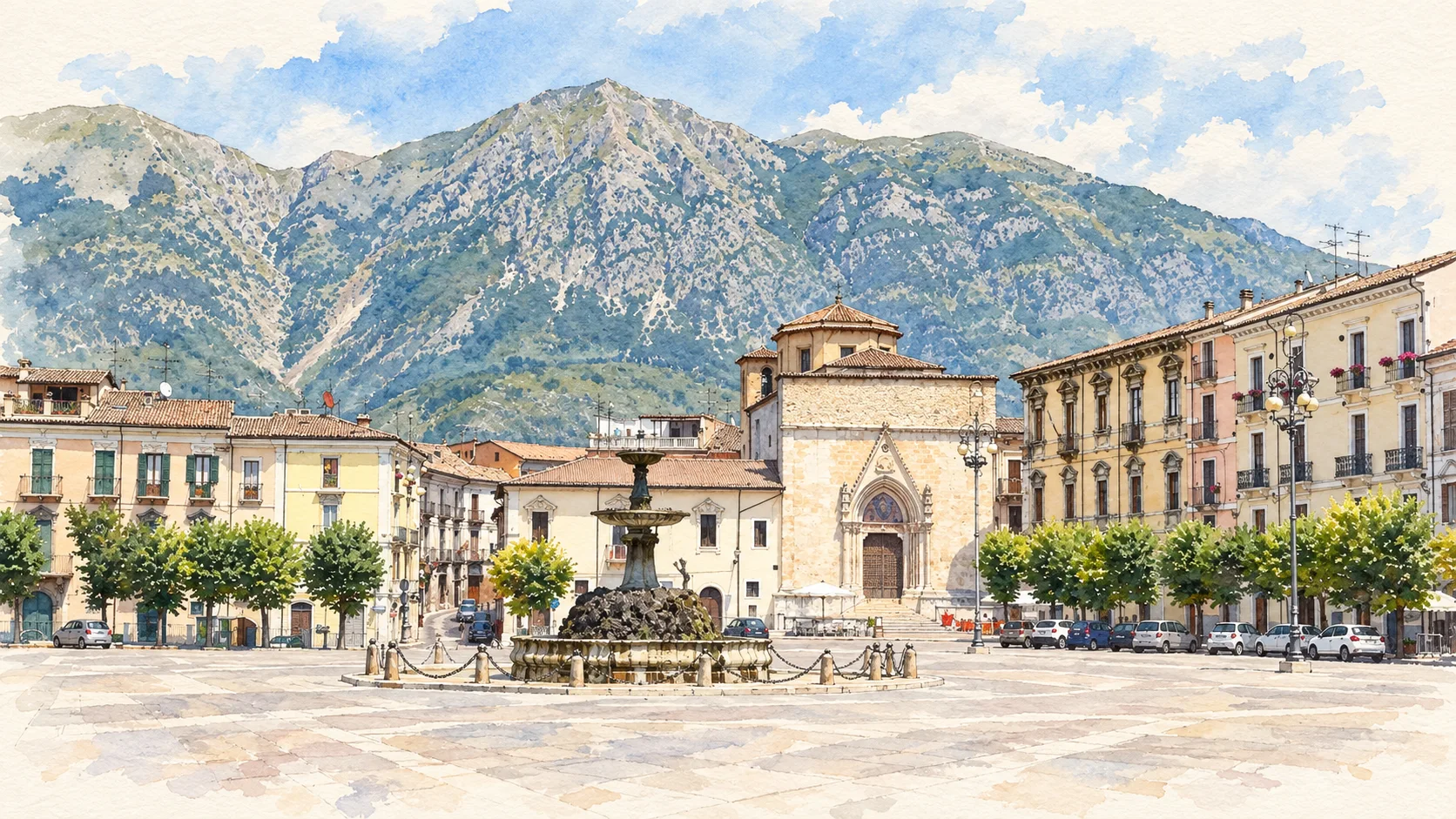
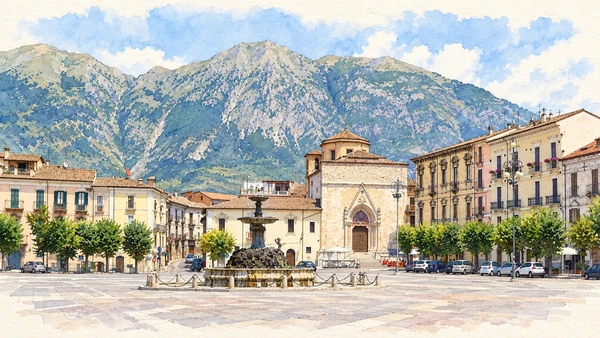
Watercolour: Piazza Garibaldi’s fountain, surrounding buildings and mountain backdrop.

Abruzzo · Guide 05

Sulmona

Water, civic architecture, Roman memory and confetti craft connect the Peligna valley city with the slopes of the Morrone.

Plan the route
Sulmona10 chapters · history, culture and landscape

Why this place matters

A valley city shaped by water and exchange.

Sulmona’s centre can be explored through the relationship between open square, aqueduct, principal street and religious buildings. Its museums add evidence beneath and inside the urban fabric. The abbey and hermitage outside town introduce another scale of religious history. They are not simply two more doors on the central walk: terrain, transport and opening arrangements change the nature of the visit.

The guide separates documented history from suggestions for reading the site. Named buildings and landscape relationships follow institutional sources; the illustrations are editorial interpretations, not measured surveys or records of current access.

Water, civic architecture, Roman memory and confetti craft connect the Peligna valley city with the slopes of the Morrone.
The route

Plan your visit

Use the centre for a day of selected monuments and museum time. Plan Santo Spirito al Morrone and Sant’Onofrio separately, checking access and the uphill approach before departure.

Central walk

Piazza Garibaldi and the aqueduct

Use the centre for a day of selected monuments and museum time. Plan Santo Spirito al Morrone and Sant’Onofrio separately, checking access and the uphill approach before departure.

Museum time

Annunziata and the civic collections

Town extension

San Panfilo, Corso Ovidio and Porta Napoli

Separate excursion

The abbey and hermitage on the Morrone

Ten chapters

Explore the places

The chapters connect history and terrain. Mountain areas and outlying towns are separate options, not a single continuous walking route.

  1. 01Piazza Garibaldi
  2. 02The medieval aqueduct
  3. 03The Annunziata complex
  4. 04The civic museum and Domus of Ariadne
  5. 05San Panfilo cathedral
  6. 06Porta Napoli
  7. 07Corso Ovidio
  8. 08Confetti and the work of making
  9. 09Santo Spirito al Morrone
  10. 10Sant’Onofrio al Morrone
01

The inhabited landscape

Piazza Garibaldi

The square is a good starting point for reading the city’s public life. Its broad floor contrasts with the streets that lead away from it and the aqueduct along one side.

Today

This remains an inhabited place. Use pedestrian routes, keep entrances clear and check municipal mobility notices for any restricted area.

History

Market activity and religious celebrations give the square overlapping civic and devotional roles. The buildings around it belong to several periods.

How to read this place

Look at the relationship between the central fountain, open space and arcades. A scene on an ordinary day differs from the temporary arrangements of a market or festival.

What to notice

  • Look at the relationship between the central fountain, open space and arcades.
  • The relationship between the site and its surrounding route.
  • The distinction between surviving evidence and modern interpretation.
Italia.it · Sulmona historic centre
Watercolour: Piazza Garibaldi’s fountain, surrounding buildings and mountain backdrop.
Piazza GaribaldiEditorial watercolour · AI-generated · 2026
02

The inhabited landscape

The medieval aqueduct

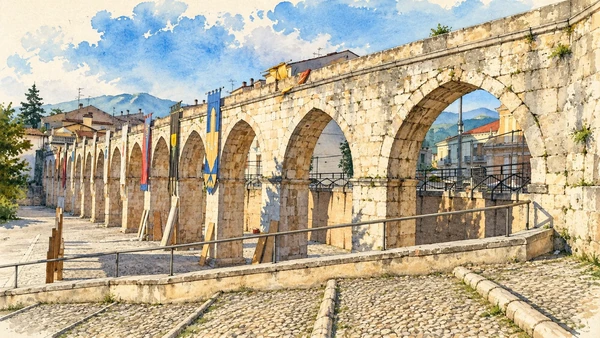
The arcades are a prominent urban monument, but their first purpose was practical. Follow their line to understand how infrastructure became part of the public face of the city.

Today

This remains an inhabited place. Use pedestrian routes, keep entrances clear and check municipal mobility notices for any restricted area.

History

An inscription dates the aqueduct to 1256, during Manfred’s reign. Water from the Gizio supplied urban uses through a network of channels.

How to read this place

Read the pointed arches as a carrying structure rather than a decorative arcade. Compare the monument’s visible line with the wider, partly invisible movement of water.

What to notice

  • Read the pointed arches as a carrying structure rather than a decorative arcade.
  • The relationship between the site and its surrounding route.
  • The distinction between surviving evidence and modern interpretation.
Comune di Sulmona · medieval aqueduct
Watercolour: The medieval aqueduct’s stone arches along Piazza Garibaldi.
The medieval aqueductEditorial watercolour · AI-generated · 2026
03

Evidence and interpretation

The Annunziata complex

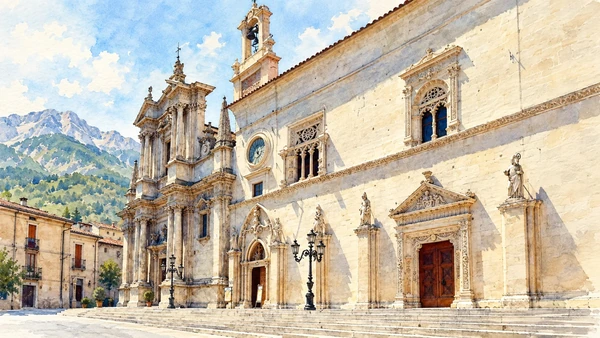
The adjoining church and palace form one of the most concentrated architectural encounters in the centre. Their façades reward close attention rather than a single distant view.

Today

Check the institution’s current opening, booking arrangements and accessible route. Individual rooms, exhibitions and approaches may have separate conditions.

History

The complex accommodates the civic museum within a building whose construction and alteration span different periods. Its mixed fabric is part of the evidence.

How to read this place

Compare openings, carving and changes in architectural rhythm. Do not force the entire ensemble into one stylistic label or mistake the museum entrance for church access.

What to notice

  • Compare openings, carving and changes in architectural rhythm.
  • The relationship between the site and its surrounding route.
  • The distinction between surviving evidence and modern interpretation.
Comune di Sulmona · civic museum
Watercolour: The richly worked facade of the Annunziata complex on Sulmona’s central street.
The Annunziata complexEditorial watercolour · AI-generated · 2026
04

Evidence and interpretation

The civic museum and Domus of Ariadne

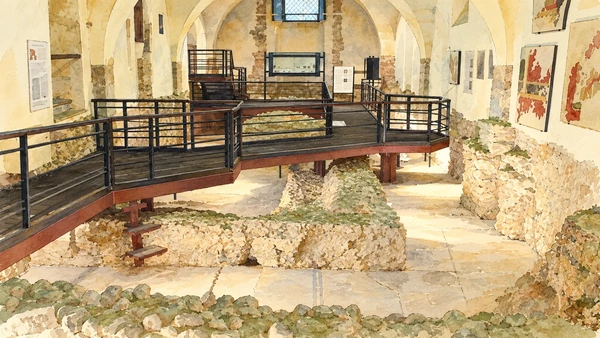
The museum makes the depth of the city visible through objects and archaeological remains. It adds a different perspective to the Annunziata’s street-facing architecture.

Today

Check the institution’s current opening, booking arrangements and accessible route. Individual rooms, exhibitions and approaches may have separate conditions.

History

The Domus of Ariadne preserves evidence of Roman domestic occupation beneath the later complex. The civic collections place that evidence within a broader urban story.

How to read this place

Distinguish ancient remains in place, excavated objects and modern explanatory work. Look for the labels that identify phases rather than assuming every adjacent wall is contemporary.

What to notice

  • Distinguish ancient remains in place, excavated objects and modern explanatory work.
  • The relationship between the site and its surrounding route.
  • The distinction between surviving evidence and modern interpretation.
Comune di Sulmona · civic museum
Watercolour: The excavated Domus beneath the Annunziata complex, seen from its modern visitor walkway.
The civic museum and Domus of AriadneEditorial watercolour · AI-generated · 2026
05

Worship and memory

San Panfilo cathedral

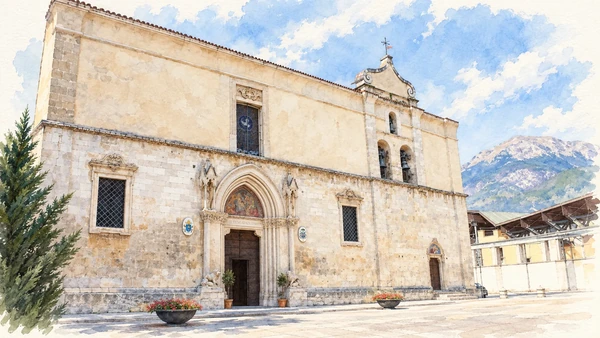
The cathedral extends the route beyond the busiest central stretch. The approach allows its relationship with the northern part of the city to become apparent.

Today

Worship and local religious life continue here. Visitor access may pause for services; consult the church or managing institution before planning an interior visit.

History

The church’s history includes medieval fabric and later interventions, including changes associated with earthquake damage and rebuilding.

How to read this place

Compare the portal, interior and crypt as different architectural spaces. Stories about the saint’s translation belong to devotional tradition; check church access independently of museum hours.

What to notice

  • Compare the portal, interior and crypt as different architectural spaces.
  • The relationship between the site and its surrounding route.
  • The distinction between surviving evidence and modern interpretation.
Comune di Sulmona · San Panfilo
Watercolour: The broad pale facade and entrance of San Panfilo cathedral.
San Panfilo cathedralEditorial watercolour · AI-generated · 2026
06

The inhabited landscape

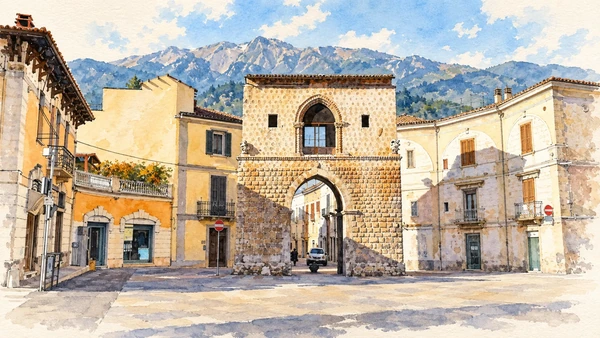
Porta Napoli

The gate marks a historic southern threshold rather than just an isolated ornament. Walk around it to see how the opening and upper structure relate to movement through the former walls.

Today

This remains an inhabited place. Use pedestrian routes, keep entrances clear and check municipal mobility notices for any restricted area.

History

Previously called Porta Nova, it controlled access on the route towards Naples, capital of the kingdom. The upper level once accommodated the guards.

How to read this place

Notice the difference between a gateway in use and a fragment left after urban expansion. The street beyond is part of its meaning.

What to notice

  • Notice the difference between a gateway in use and a fragment left after urban expansion.
  • The relationship between the site and its surrounding route.
  • The distinction between surviving evidence and modern interpretation.
Comune di Sulmona · Porta Napoli
Watercolour: The surviving stone gateway of Porta Napoli.
Porta NapoliEditorial watercolour · AI-generated · 2026
07

The inhabited landscape

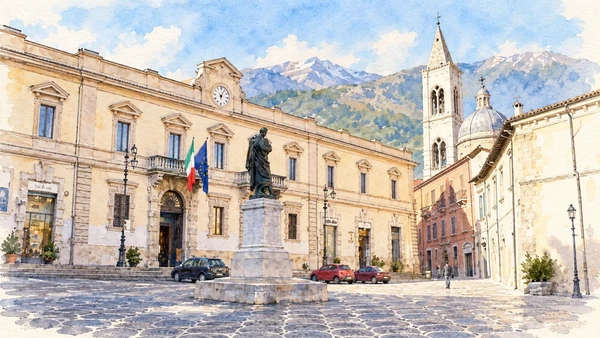
Corso Ovidio

The principal street connects monuments with shops and ordinary movement. It is useful for understanding Sulmona as a city rather than a list of separate attractions.

Today

This remains an inhabited place. Use pedestrian routes, keep entrances clear and check municipal mobility notices for any restricted area.

History

The name commemorates the Roman poet born in Sulmo. The surrounding façades, however, belong largely to later urban history.

How to read this place

Keep literary commemoration separate from surviving Roman evidence. Compare the rhythm of shop openings and palaces while leaving residential entrances unobstructed.

What to notice

  • Keep literary commemoration separate from surviving Roman evidence.
  • The relationship between the site and its surrounding route.
  • The distinction between surviving evidence and modern interpretation.
Italia.it · Sulmona historic centre
Watercolour: The statue of Ovid in Piazza XX Settembre beside the Corso Ovidio route.
Corso OvidioEditorial watercolour · AI-generated · 2026
08

Materials and work

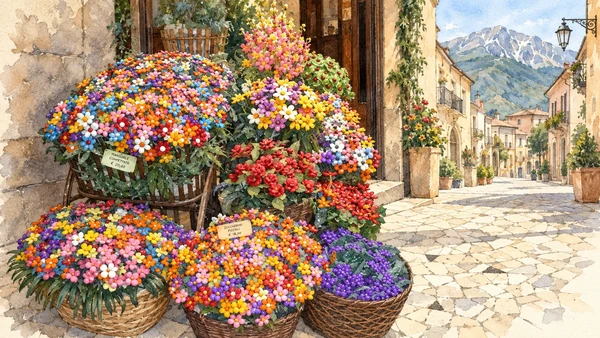
Confetti and the work of making

Sugar-coated almonds are part of a local production culture as well as a familiar gift. A shop or museum visit can reveal choices of material, colour and presentation.

Today

Workshops are places of work. Arrange a visit where offered and ask permission before entering private spaces or photographing a maker.

History

Sulmona is closely associated with confetti manufacture. The tradition forms part of the city’s economic and ceremonial identity.

How to read this place

Ask how the product is made and distinguish manufacturing history from promotional origin stories. Workshops and factory areas require the operator’s permission; a retail display is not an open production line.

What to notice

  • Ask how the product is made and distinguish manufacturing history from promotional origin stories.
  • The relationship between the site and its surrounding route.
  • The distinction between surviving evidence and modern interpretation.
Italia.it · Sulmona historic centre
Watercolour: Colourful flower-shaped arrangements of Sulmona confetti.
Confetti and the work of makingEditorial watercolour · AI-generated · 2026
09

Evidence and interpretation

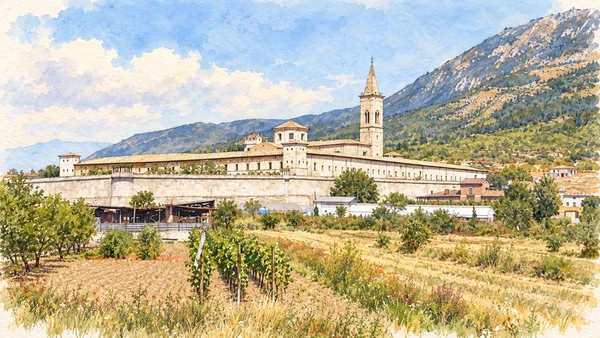
Santo Spirito al Morrone

The large abbey complex lies outside the central walk. Its scale makes it a substantial visit rather than a brief prelude to the hermitage above.

Today

Check the institution’s current opening, booking arrangements and accessible route. Individual rooms, exhibitions and approaches may have separate conditions.

History

The abbey was a major centre of the Celestinian order. Later institutional uses and restoration form part of the building’s layered history.

How to read this place

Read courtyards, circulation and the relationship between communal space and religious function. Confirm which areas are accessible before assuming that the whole complex forms one museum route.

What to notice

  • Read courtyards, circulation and the relationship between communal space and religious function.
  • The relationship between the site and its surrounding route.
  • The distinction between surviving evidence and modern interpretation.
National Museums of Abruzzo · Santo Spirito al Morrone
Watercolour: The extensive abbey buildings of Santo Spirito al Morrone outside Sulmona.
Santo Spirito al MorroneEditorial watercolour · AI-generated · 2026
10

Worship and memory

Sant’Onofrio al Morrone

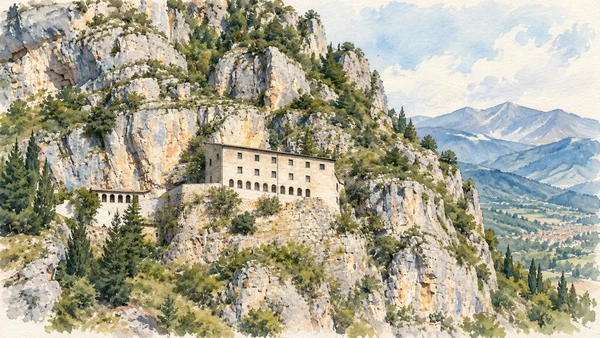
The hermitage occupies a rocky setting above the valley. Its approach is a walk with terrain and exposure, not simply the final corridor of the abbey visit.

Today

Worship and local religious life continue here. Visitor access may pause for services; consult the church or managing institution before planning an interior visit.

History

The site is associated with Pietro da Morrone, later Celestine V. Its small spaces contrast with the institutional scale of the abbey below.

How to read this place

Look at how masonry uses the cliff rather than imagining a freestanding palace. Verify the path and opening conditions, and keep a return plan appropriate to weather and daylight.

What to notice

  • Look at how masonry uses the cliff rather than imagining a freestanding palace.
  • The relationship between the site and its surrounding route.
  • The distinction between surviving evidence and modern interpretation.
Maiella National Park · Sant’Onofrio del Morrone
Watercolour: Sant’Onofrio al Morrone’s small hermitage against the rocky slope.
Sant’Onofrio al MorroneEditorial watercolour · AI-generated · 2026

The territory through time

A short chronology

A concise chronology linking the documented sites to the wider story.

  1. The Domus beneath the Annunziata offers archaeological evidence of earlier urban life.

  2. The medieval aqueduct is built under Manfred; it is not a surviving Roman aqueduct.

  3. The Morrone hermitage and abbey connect the valley with Pietro da Morrone.

  4. Successive building campaigns create a complex of civic, religious and artistic layers.

  5. Porta Napoli marks a historic approach to the urban centre.

  6. Skilled manufacture and trade make sugar-coated almonds part of Sulmona’s identity.

  7. Collections and restored buildings provide settings for interpreting surviving evidence.

  8. The central walk and the outlying Morrone sites require different visit plans.

Before your visit

Practical information

01

Plan separate days

Choose a manageable set of visits and allow for transport, booked entries and the return journey.

02

Use the exact place name

Similar religious names can refer to different sites. Santo Spirito al Morrone near Sulmona and Santo Spirito a Maiella near Roccamorice require separate journeys.

03

Check the institution

Opening hours, tickets, exhibitions and religious access change. Use the linked managing institution shortly before visiting.

04

Check the actual terrain

A town walk, gorge walkway, lift arrival and mountain path have different demands. Use current route information, weather and closures for the option you choose.

05

Arrange accessible visits

Historic interiors and mountain approaches can include steps, gradients or uneven surfaces. Ask about the specific route instead of assuming an entire destination is step-free.

06

Respect work and residence

Farms, workshops, churches and historic streets remain in use. Follow signs, keep entrances clear and ask permission before entering private spaces.

Method and sources

Sources and image credits

Prepared on 8 September 2026 from the institutional sources linked below. Historical claims are separated from editorial observations and itinerary suggestions. Older institutional brochures are used for stable cultural context, never as current timetables. Prices, transport schedules, trail status and admission are deliberately left to the responsible operators. Illustrations are not photographs, measured reconstructions or evidence of current conditions.

The eleven images are AI-generated editorial watercolours guided by photographic references. They interpret named places and are not photographs or substitutes for measured plans. Opening hours, tickets, accessible routes, temporary exhibitions and conservation work can change; consult the linked official pages shortly before visiting.