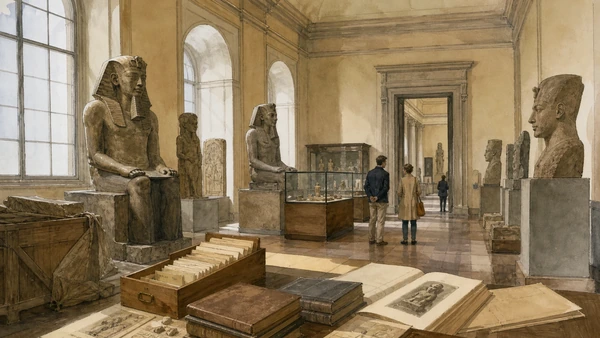
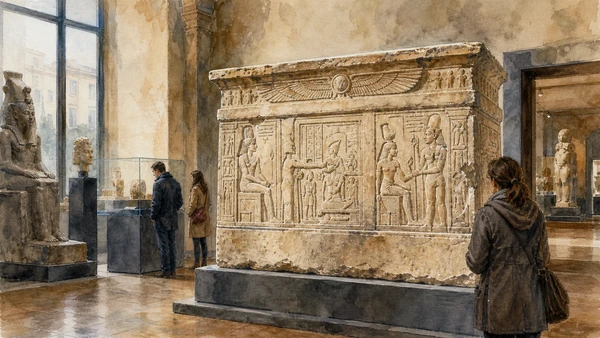
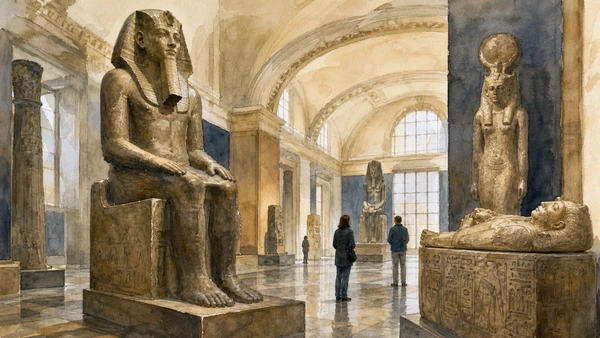
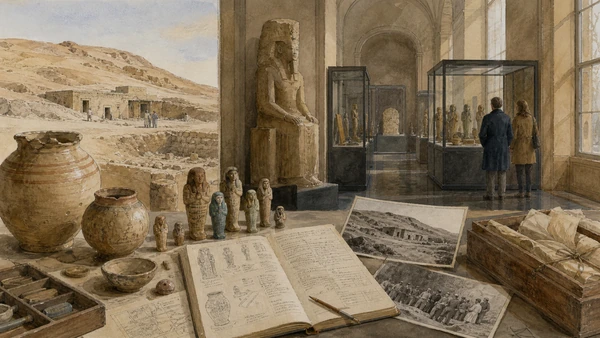
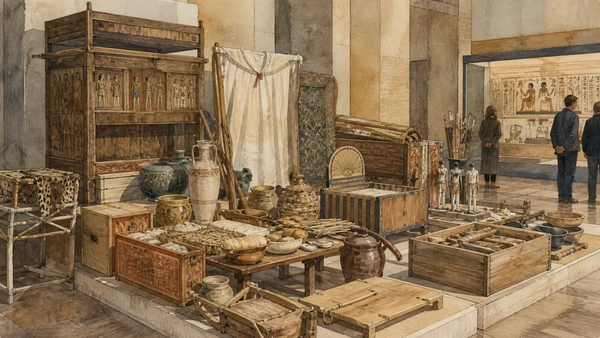
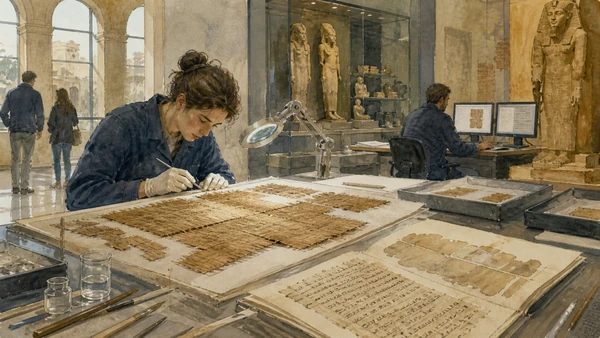
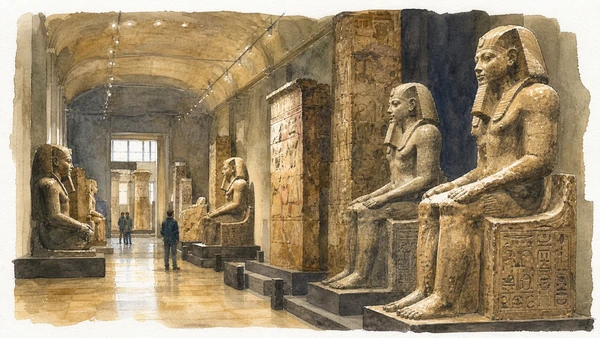
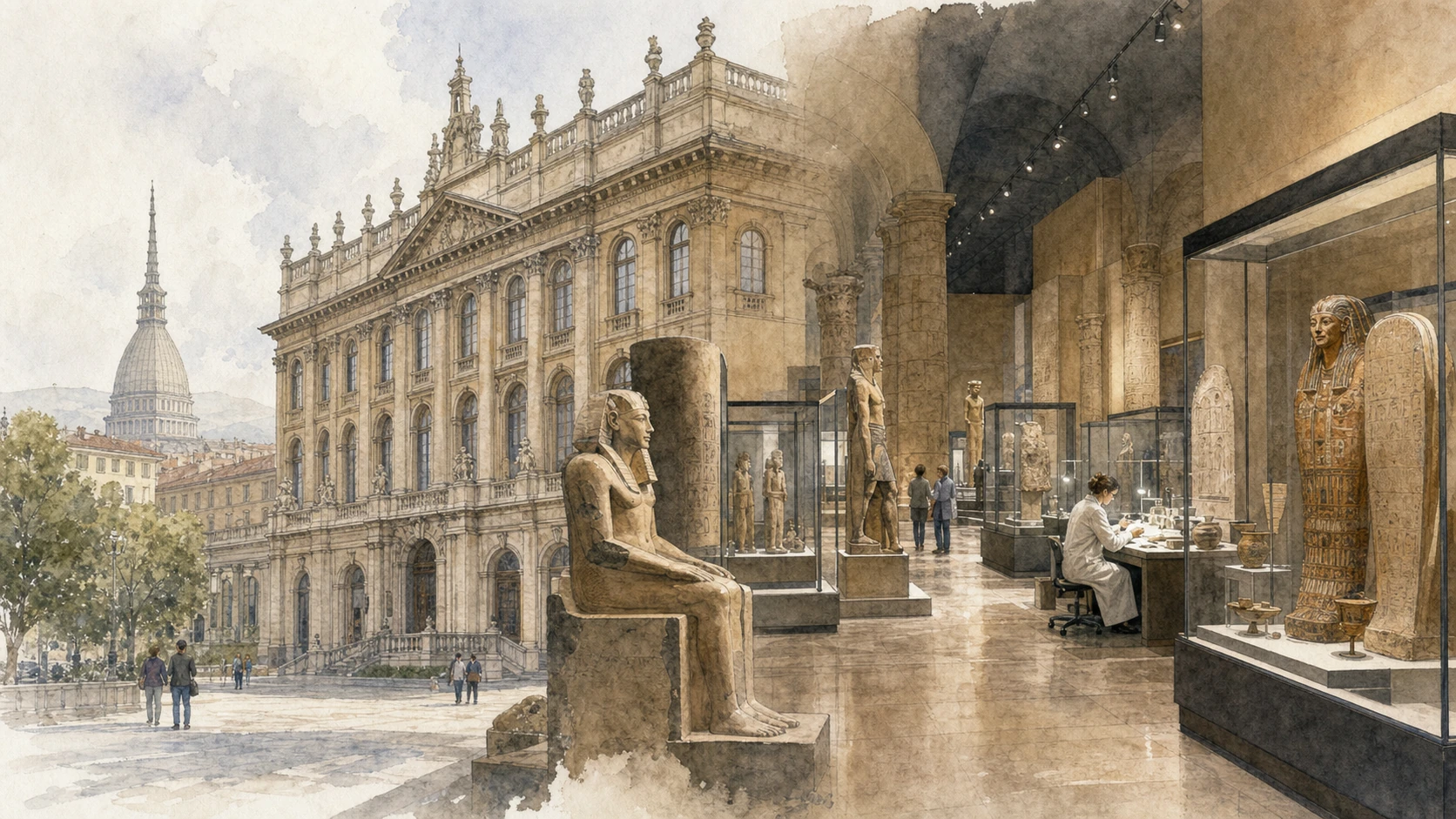
Original documentary watercolour panorama for Museo Egizio and the City of Collections: Complete Guide, with accurate Piedmont architecture, landscape and lived context

Turin Guide 03 · Museum history, archaeology, papyri, statuary, conservation, academies and responsible interpretation

Museo Egizio
& the City of Collections

A complete institutional guide to the Museo Egizio and its Turin setting, treating excavation, acquisition, research, restoration and display as part of the story rather than presenting ancient Egypt as a detached spectacle.

Plan the route
Turin · Piedmont10 chapters · one complete route

Why this route must be read in layers

The museum is both a major Egyptian collection and a record of European collecting power. Its value becomes clearer when objects, excavation archives, human remains, architectural setting and current scholarship are read together.

The collection grew through Savoy acquisitions, diplomatic networks and archaeological campaigns. These acquisitions reached Turin through different channels and periods.

Objects retain Egyptian histories that long predate the museum. Labels, provenance, excavation context, material analysis and conservation explain more than visual fame alone.

The museum’s research, digital resources and policies concerning human remains demonstrate that interpretation is continuing. Temporary displays and gallery access therefore remain live institutional facts.

Reserve enough time to read labels and context, use the museum’s own collection records, and never claim that visibility, ownership history or interpretation is settled simply because an object is famous.

The route

Plan your visit

Begin with the building and museum history, follow the chronological and thematic galleries at a sustainable pace, then return to provenance, conservation and the Turin institutions around the collection.

Early morning

Palazzo dell’Accademia delle Scienze · 1824 and the museum’s foundation · Mensa Isiaca and early Egyptian taste in Turin

Move in the documented order: Palazzo dell’Accademia delle Scienze: a museum inside a learned institution; then 1824 and the museum’s foundation: acquisition before public narrative; then Mensa Isiaca and early Egyptian taste in Turin. Recheck live access and transport before entering a controlled site.

Late morning

The Drovetti collection · Schiaparelli’s excavations · The tomb assemblage of Kha and Merit

Move in the documented order: The Drovetti collection: diplomacy, market and missing contexts; then Schiaparelli’s excavations: archaeology and archival context; then The tomb assemblage of Kha and Merit: a household, not a treasure list. Recheck live access and transport before entering a controlled site.

Afternoon

Papyri · Gallery of Kings · Temple of Ellesiya

Move in the documented order: Papyri: language, fragments and the work of reconstruction; then Gallery of Kings: monumentality under controlled light; then Temple of Ellesiya: rescue, donation and relocation. Recheck live access and transport before entering a controlled site.

Late afternoon

Research, conservation and human remains

Move in the documented order: Research, conservation and human remains: the museum is still changing. Recheck live access and transport before entering a controlled site.

Ten chapters

Explore the places

The order follows terrain, institutions and present-day movement. Use the index to return to a chapter without reducing the route to isolated monuments.

  1. 01Palazzo dell’Accademia delle Scienze: a museum inside a learned institution
  2. 021824 and the museum’s foundation: acquisition before public narrative
  3. 03Mensa Isiaca and early Egyptian taste in Turin
  4. 04The Drovetti collection: diplomacy, market and missing contexts
  5. 05Schiaparelli’s excavations: archaeology and archival context
  6. 06The tomb assemblage of Kha and Merit: a household, not a treasure list
  7. 07Papyri: language, fragments and the work of reconstruction
  8. 08Gallery of Kings: monumentality under controlled light
  9. 09Temple of Ellesiya: rescue, donation and relocation
  10. 10Research, conservation and human remains: the museum is still changing
01

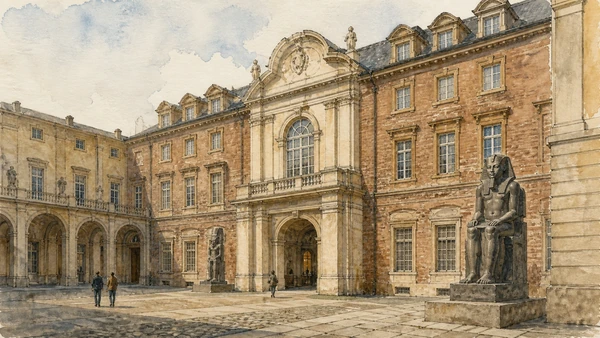
The former Collegio dei Nobili houses both the Egyptian Museum and the Academy, making architecture part of the collection’s institutional history.

Palazzo dell’Accademia delle Scienze: a museum inside a learned institution

The former Collegio dei Nobili houses both the Egyptian Museum and the Academy, making architecture part of the collection’s institutional history. The site becomes clearer when its surviving fabric, later alterations and present use are read together.

Today

Opening, ticketing, room access and temporary displays can change. Check the institution’s official notice shortly before visiting, use the designated entrance and allow for security or conservation controls.

History

The Baroque building was begun in the late seventeenth century and adapted as royal museum space after the Drovetti collection entered Turin in the nineteenth century.

How to read this place

Begin with the palace’s brick mass and courtyard. Then compare museum circulation inserted into older rooms with the continuing presence of the academy; the differences are evidence, not visual noise.

What to notice

  • the palace’s brick mass and courtyard
  • museum circulation inserted into older rooms
  • the continuing presence of the Academy
Museo Egizio · Official site
Original documentary watercolour of Palazzo dell'Accademia delle Scienze: a museum inside a learned institution in Turin · Piedmont, showing accurate architecture, landscape, people and present-day use
Palazzo dell’Accademia delle Scienze: a museum inside a learned institutionOriginal Merlintravel documentary watercolour · 2026
02

The purchase of Bernardino Drovetti’s collection created the core of a museum whose objects had already passed through excavation, commerce and diplomacy.

1824 and the museum’s foundation: acquisition before public narrative

The purchase of Bernardino Drovetti’s collection created the core of a museum whose objects had already passed through excavation, commerce and diplomacy. The site becomes clearer when its surviving fabric, later alterations and present use are read together.

Today

Opening, ticketing, room access and temporary displays can change. Check the institution’s official notice shortly before visiting, use the designated entrance and allow for security or conservation controls.

History

King Carlo Felice acquired the Drovetti collection in the 1820s, and the museum opened to the public in the following decade alongside other royal scientific collections.

How to read this place

Begin with documented acquisition names and dates. Then compare old catalogue systems with later interpretation correcting earlier narratives; the differences are evidence, not visual noise.

What to notice

  • documented acquisition names and dates
  • old catalogue systems
  • later interpretation correcting earlier narratives
Museo Egizio · Official site
Original documentary watercolour of 1824 and the museum's foundation: acquisition before public narrative in Turin · Piedmont, showing accurate architecture, landscape, people and present-day use
1824 and the museum’s foundation: acquisition before public narrativeOriginal Merlintravel documentary watercolour · 2026
03

A Roman object with Egyptianising imagery shows that European fascination and classification preceded modern Egyptology.

Mensa Isiaca and early Egyptian taste in Turin

A Roman object with Egyptianising imagery shows that European fascination and classification preceded modern Egyptology. The site becomes clearer when its surviving fabric, later alterations and present use are read together.

Today

Opening, ticketing, room access and temporary displays can change. Check the institution’s official notice shortly before visiting, use the designated entrance and allow for security or conservation controls.

History

The Mensa Isiaca reached Savoy collections in the seventeenth century and helped stimulate speculation about Egypt before linguistic decipherment and scientific archaeology.

How to read this place

Begin with roman manufacture versus egyptian imagery. Then compare older labels and changing attribution with the object’s path through european collections; the differences are evidence, not visual noise.

What to notice

  • Roman manufacture versus Egyptian imagery
  • older labels and changing attribution
  • the object’s path through European collections
Museo Egizio · Official site
Original documentary watercolour of Mensa Isiaca and early Egyptian taste in Turin in Turin · Piedmont, showing accurate architecture, landscape, people and present-day use
Mensa Isiaca and early Egyptian taste in TurinOriginal Merlintravel documentary watercolour · 2026
04

Monumental works entered Turin through a collection assembled during a period of intense European competition in Egypt.

The Drovetti collection: diplomacy, market and missing contexts

Monumental works entered Turin through a collection assembled during a period of intense European competition in Egypt. The site becomes clearer when its surviving fabric, later alterations and present use are read together.

Today

Opening, ticketing, room access and temporary displays can change. Check the institution’s official notice shortly before visiting, use the designated entrance and allow for security or conservation controls.

History

Bernardino Drovetti used diplomatic position and local networks to assemble antiquities later divided among major European institutions; many objects lack modern excavation documentation.

How to read this place

Begin with provenance stated in labels. Then compare gaps in findspot information with the difference between acquisition history and ancient context; the differences are evidence, not visual noise.

What to notice

  • provenance stated in labels
  • gaps in findspot information
  • the difference between acquisition history and ancient context
Museo Egizio · Official site
Original documentary watercolour of The Drovetti collection: diplomacy, market and missing contexts in Turin · Piedmont, showing accurate architecture, landscape, people and present-day use
The Drovetti collection: diplomacy, market and missing contextsOriginal Merlintravel documentary watercolour · 2026
05

Objects from documented Italian missions can be reconnected to sites, field records, photographs and assemblages.

Schiaparelli’s excavations: archaeology and archival context

Objects from documented Italian missions can be reconnected to sites, field records, photographs and assemblages. The site becomes clearer when its surviving fabric, later alterations and present use are read together.

Today

Opening, ticketing, room access and temporary displays can change. Check the institution’s official notice shortly before visiting, use the designated entrance and allow for security or conservation controls.

History

Ernesto Schiaparelli directed early twentieth-century excavations at sites including Deir el-Medina and Gebelein under the archaeological systems of the period.

How to read this place

Begin with field numbers and findspots. Then compare objects displayed as groups with archive images compared with present installation; the differences are evidence, not visual noise.

What to notice

  • field numbers and findspots
  • objects displayed as groups
  • archive images compared with present installation
Museo Egizio · Official site
Original documentary watercolour of Schiaparelli's excavations: archaeology and archival context in Turin · Piedmont, showing accurate architecture, landscape, people and present-day use
Schiaparelli’s excavations: archaeology and archival contextOriginal Merlintravel documentary watercolour · 2026
06

Furniture, clothing, food, tools and funerary equipment preserve an unusually extensive assemblage from Deir el-Medina.

The tomb assemblage of Kha and Merit: a household, not a treasure list

Furniture, clothing, food, tools and funerary equipment preserve an unusually extensive assemblage from Deir el-Medina. The site becomes clearer when its surviving fabric, later alterations and present use are read together.

Today

Opening, ticketing, room access and temporary displays can change. Check the institution’s official notice shortly before visiting, use the designated entrance and allow for security or conservation controls.

History

The intact tomb was excavated by the Italian mission in 1906, and its contents entered Turin through the official division practices then governing foreign excavations in Egypt.

How to read this place

Begin with ordinary objects beside luxury materials. Then compare relationships among items in one assemblage with labels reconstructing use rather than price; the differences are evidence, not visual noise.

What to notice

  • ordinary objects beside luxury materials
  • relationships among items in one assemblage
  • labels reconstructing use rather than price
Museo Egizio · Official site
Original documentary watercolour of The tomb assemblage of Kha and Merit: a household, not a treasure list in Turin · Piedmont, showing accurate architecture, landscape, people and present-day use
The tomb assemblage of Kha and Merit: a household, not a treasure listOriginal Merlintravel documentary watercolour · 2026
07

Administrative, literary, ritual and personal texts survive in fragile pieces whose meaning depends on language and context.

Papyri: language, fragments and the work of reconstruction

Administrative, literary, ritual and personal texts survive in fragile pieces whose meaning depends on language and context. The site becomes clearer when its surviving fabric, later alterations and present use are read together.

Today

Opening, ticketing, room access and temporary displays can change. Check the institution’s official notice shortly before visiting, use the designated entrance and allow for security or conservation controls.

History

The museum’s papyrus holdings grew through acquisitions and excavations and now support conservation, digitisation and international research projects.

How to read this place

Begin with fibres and joins in the material. Then compare transcription separated from translation with fragments whose missing portions remain acknowledged; the differences are evidence, not visual noise.

What to notice

  • fibres and joins in the material
  • transcription separated from translation
  • fragments whose missing portions remain acknowledged
Museo Egizio · Official site
Original documentary watercolour of Papyri: language, fragments and the work of reconstruction in Turin · Piedmont, showing accurate architecture, landscape, people and present-day use
Papyri: language, fragments and the work of reconstructionOriginal Merlintravel documentary watercolour · 2026
09

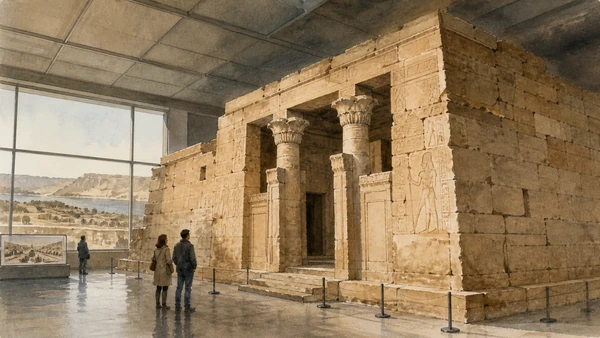
A rock-cut Nubian temple reconstructed indoors makes international rescue archaeology and displacement visible.

Temple of Ellesiya: rescue, donation and relocation

A rock-cut Nubian temple reconstructed indoors makes international rescue archaeology and displacement visible. The site becomes clearer when its surviving fabric, later alterations and present use are read together.

Today

Opening, ticketing, room access and temporary displays can change. Check the institution’s official notice shortly before visiting, use the designated entrance and allow for security or conservation controls.

History

Egypt donated the temple to Italy after the Nubian monument rescue campaign associated with construction of the Aswan High Dam; it was reassembled in Turin in the 1970s.

How to read this place

Begin with cut blocks and assembly joints. Then compare orientation lost in the indoor setting with documentation of the nubian landscape; the differences are evidence, not visual noise.

What to notice

  • cut blocks and assembly joints
  • orientation lost in the indoor setting
  • documentation of the Nubian landscape
Museo Egizio · Official site
Original documentary watercolour of Temple of Ellesiya: rescue, donation and relocation in Turin · Piedmont, showing accurate architecture, landscape, people and present-day use
Temple of Ellesiya: rescue, donation and relocationOriginal Merlintravel documentary watercolour · 2026
10

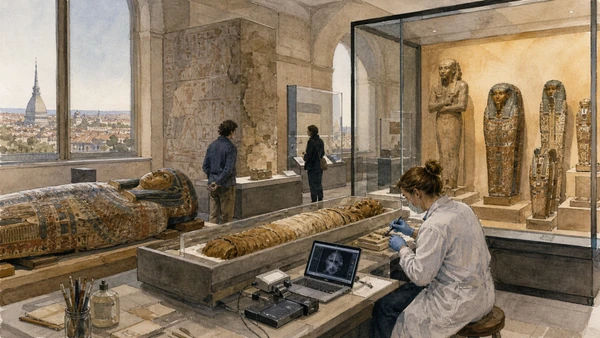
Current study, non-invasive analysis, conservation and ethical policy affect what is displayed and how ancient people are described.

Research, conservation and human remains: the museum is still changing

Current study, non-invasive analysis, conservation and ethical policy affect what is displayed and how ancient people are described. The site becomes clearer when its surviving fabric, later alterations and present use are read together.

Today

Opening, ticketing, room access and temporary displays can change. Check the institution’s official notice shortly before visiting, use the designated entrance and allow for security or conservation controls.

History

Modern museums increasingly reassess earlier collecting, terminology, display of human remains and public access to documentation rather than treating inherited arrangements as neutral.

How to read this place

Begin with research updates in labels. Then compare conservation mounts and controlled climate with language that identifies uncertainty and personhood; the differences are evidence, not visual noise.

What to notice

  • research updates in labels
  • conservation mounts and controlled climate
  • language that identifies uncertainty and personhood
Museo Egizio · Official site
Original documentary watercolour of Research, conservation and human remains: the museum is still changing in Turin · Piedmont, showing accurate architecture, landscape, people and present-day use
Research, conservation and human remains: the museum is still changingOriginal Merlintravel documentary watercolour · 2026

Turin through time

A short chronology

From Augusta Taurinorum and the Savoy court to national capital, industrial metropolis and contemporary reuse.

  1. Augusta Taurinorum is founded on a regular Roman grid close to the Po and Dora corridors.

  2. Gates, theatre, walls and urban infrastructure develop within the Roman colony.

  3. Bishops, communes, churches and fortified routes reshape the medieval city and its territory.

  4. The House of Savoy establishes firmer control over Turin, beginning a long dynastic transformation.

  5. The University of Turin is founded and becomes a durable part of the city’s institutional landscape.

  6. Emanuele Filiberto transfers the Savoy capital to Turin, accelerating court planning and fortification.

  7. New squares, straight streets, palaces and churches expand the capital beyond the Roman core.

  8. Guarino Guarini works in Turin, transforming sacred and court architecture through geometry and light.

  9. The siege of Turin ends; the victory is later commemorated through Juvarra’s Basilica of Superga.

  10. Royal status and Juvarra’s projects reinforce Turin’s ceremonial axes and metropolitan residence system.

  11. The Statuto Albertino and the Subalpine Parliament make Turin central to constitutional politics.

  12. Turin serves as the first capital of the Kingdom of Italy before the government moves to Florence.

  13. FIAT, Lingotto and Mirafiori help turn Turin into a major industrial and migrant metropolis.

  14. Bombing, occupation, resistance and liberation damage the city and leave a complex memorial geography.

  15. Deindustrialisation, museum growth, adaptive reuse and metropolitan regeneration repeatedly change Turin.

Before your visit

Practical information

01

Check the live page

Opening hours, reservation systems, restoration, exhibitions and transport can change. Recheck the linked official institution shortly before departure.

02

Separate worship and tourism

Churches and sanctuaries remain religious spaces. Services, funerals and community use take priority over visitor itineraries.

03

Plan real distances

Turin · Piedmont combines dense urban routes with lakes, valleys and dispersed towns. Do not compress distant chapters into an unsafe or superficial day.

04

Keep thresholds open

Arcades, station halls, markets, courtyards, workshops and residential streets must continue to function while you observe or photograph them.

05

Use current mobility data

Check the responsible rail, navigation, bus, road or park operator on the day; replacement services and weather can change an otherwise sound route.

06

Read change honestly

Restoration, reconstruction, adaptive reuse and new development have all shaped the landscape visible today.

Method and sources

Sources and image credits

This guide uses official museum, ministry, municipal, transport, park and UNESCO documentation checked on 29 August 2026. It separates durable historical interpretation from access details that can change, distinguishes surviving fabric from restoration or reconstruction, and treats worship, work, residence and public movement as part of the evidence. Every chapter links its principal institutional source; tickets, closures, weather and transport must always be verified again on the day of the visit.

All ten images are original Merlintravel editorial watercolours based on documented present-day conditions. They are illustrations, not substitutes for archaeological plans. Opening hours, tickets, accessible routes, temporary exhibitions and conservation work can change; consult the linked official pages shortly before visiting.