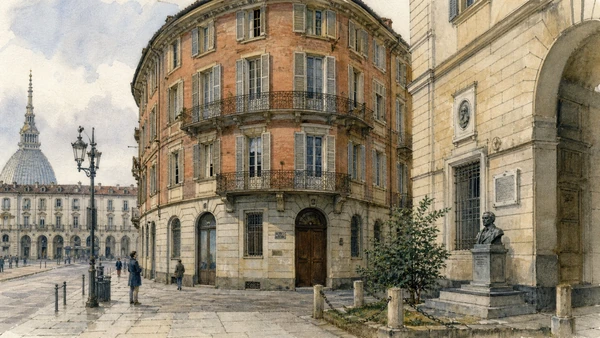
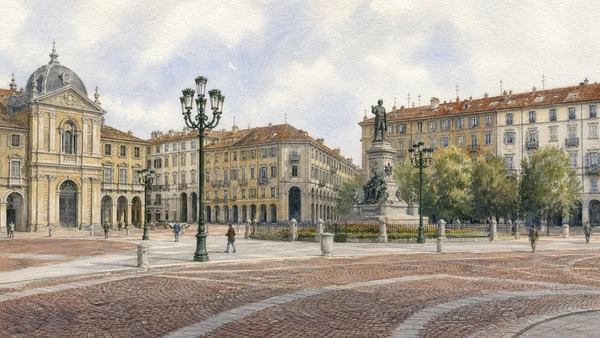
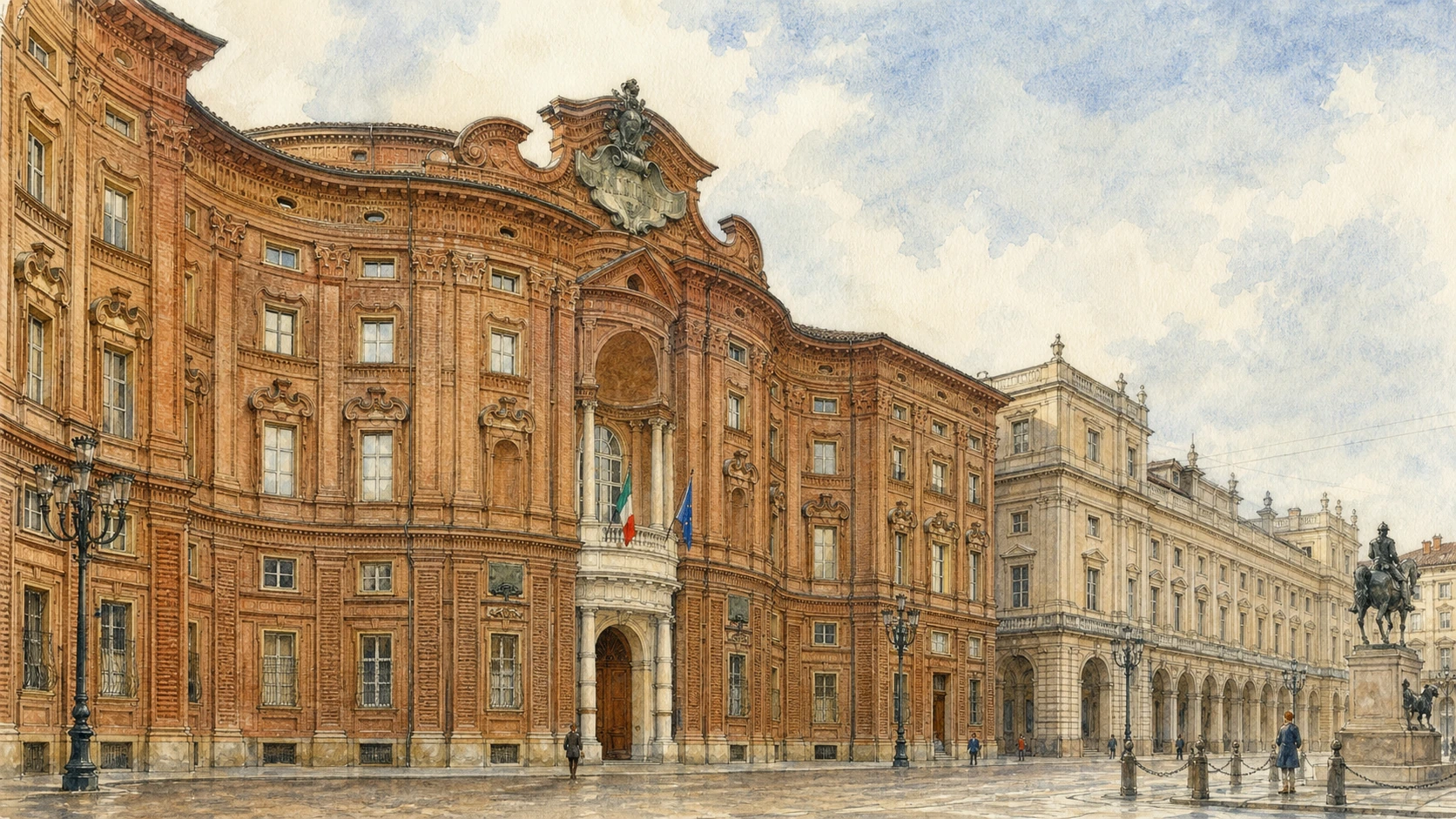
Original documentary watercolour panorama for Palazzo Carignano and the Risorgimento City: Complete Guide, with accurate Piedmont architecture, landscape and lived context

Turin Guide 05 · Guarini’s palace, parliament chambers, constitutional institutions, Cavour and contested national memory

Palazzo Carignano
& the Risorgimento City

A complete political and architectural guide centred on Palazzo Carignano, following its change from princely residence to parliamentary building and national museum before testing Turin’s patriotic monuments against documents, institutions and European context.

Plan the route
Turin · Piedmont10 chapters · one complete route

Why this route must be read in layers

The Risorgimento was neither one inevitable march nor the work of a few statues. Turin preserves chambers, archives, streets and monuments through which competing constitutional, dynastic, military, republican and popular projects were later organised into national memory.

Guarini’s curved brick façade belongs to a seventeenth-century residence, while the nineteenth-century rear wing answered parliamentary needs. The building must be read from both sides.

The Subalpine chamber survives as an unusually direct political interior. Museum display can connect speeches and leaders to voting rules, war, diplomacy, labour, gender and regional conflict.

Squares named for Carlo Alberto and Carlo Felice, Cavour’s house and later monuments are acts of commemoration. They reveal what institutions chose to remember, not neutral summaries of unification.

Begin with the palace exterior and its two chronologies, give the museum a full controlled visit, then use nearby monuments and streets as evidence of later memory-making rather than as substitutes for history.

The route

Plan your visit

Read Palazzo Carignano from Piazza Carignano and Piazza Carlo Alberto, enter the museum chronologically, then compare institutional and commemorative sites toward Piazza Carlina and Cavour’s quarter.

Early morning

Palazzo Carignano’s Baroque façade · Courtyard and apartments · Subalpine Parliament chamber

Move in the documented order: Palazzo Carignano’s Baroque façade: dynasty in curved brick; then Courtyard and apartments: a residence before Parliament; then Subalpine Parliament chamber: constitutional politics in its original room. Recheck live access and transport before entering a controlled site.

Late morning

The Italian Parliament wing · National Museum of the Risorgimento · The Statuto Albertino

Move in the documented order: The Italian Parliament wing: expansion that arrived too late; then National Museum of the Risorgimento: collection and interpretation; then The Statuto Albertino: constitutional text and political limits. Recheck live access and transport before entering a controlled site.

Afternoon

Piazza Carlo Alberto · National University Library · Cavour in Turin

Move in the documented order: Piazza Carlo Alberto: a square built around historical revision; then National University Library: knowledge, loss and reconstruction; then Cavour in Turin: residence, ministry and constructed memory. Recheck live access and transport before entering a controlled site.

Late afternoon

Piazza Carlo Emanuele II and national memory beyond one dynasty

Move in the documented order: Piazza Carlo Emanuele II and national memory beyond one dynasty. Recheck live access and transport before entering a controlled site.

Ten chapters

Explore the places

The order follows terrain, institutions and present-day movement. Use the index to return to a chapter without reducing the route to isolated monuments.

  1. 01Palazzo Carignano’s Baroque façade: dynasty in curved brick
  2. 02Courtyard and apartments: a residence before Parliament
  3. 03Subalpine Parliament chamber: constitutional politics in its original room
  4. 04The Italian Parliament wing: expansion that arrived too late
  5. 05National Museum of the Risorgimento: collection and interpretation
  6. 06The Statuto Albertino: constitutional text and political limits
  7. 07Piazza Carlo Alberto: a square built around historical revision
  8. 08National University Library: knowledge, loss and reconstruction
  9. 09Cavour in Turin: residence, ministry and constructed memory
  10. 10Piazza Carlo Emanuele II and national memory beyond one dynasty
01

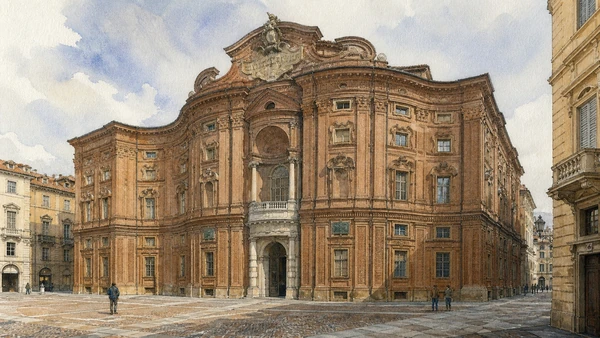
Undulating walls, layered bays and a deep central entrance turn brick construction into a princely public identity.

Palazzo Carignano’s Baroque façade: dynasty in curved brick

Undulating walls, layered bays and a deep central entrance turn brick construction into a princely public identity. The site becomes clearer when its surviving fabric, later alterations and present use are read together.

Today

Opening, ticketing, room access and temporary displays can change. Check the institution’s official notice shortly before visiting, use the designated entrance and allow for security or conservation controls.

History

Guarino Guarini designed the palace from 1679 for the Savoy-Carignano branch, combining residence, court status and a constrained urban site.

How to read this place

Begin with curved brick planes and shadows. Then compare carved stone around the entrance with the tight scale of piazza carignano; the differences are evidence, not visual noise.

What to notice

  • curved brick planes and shadows
  • carved stone around the entrance
  • the tight scale of Piazza Carignano
Museo Nazionale del Risorgimento Italiano · Official site
Original documentary watercolour of Palazzo Carignano's Baroque façade: dynasty in curved brick in Turin · Piedmont, showing accurate architecture, landscape, people and present-day use
Palazzo Carignano’s Baroque façade: dynasty in curved brickOriginal Merlintravel documentary watercolour · 2026
02

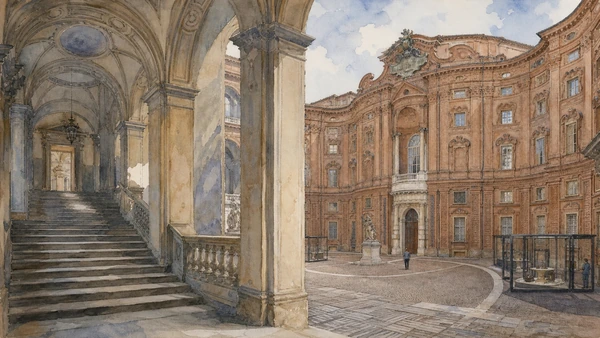
Stairs, rooms and court circulation preserve the building’s first function beneath later national uses.

Courtyard and apartments: a residence before Parliament

Stairs, rooms and court circulation preserve the building’s first function beneath later national uses. The site becomes clearer when its surviving fabric, later alterations and present use are read together.

Today

Opening, ticketing, room access and temporary displays can change. Check the institution’s official notice shortly before visiting, use the designated entrance and allow for security or conservation controls.

History

The palace housed the Carignano family and was the birthplace of Charles Albert and Victor Emmanuel II before institutional conversion altered rooms and access.

How to read this place

Begin with guarini’s stair geometry. Then compare court and service circulation with later museum elements inserted into apartments; the differences are evidence, not visual noise.

What to notice

  • Guarini’s stair geometry
  • court and service circulation
  • later museum elements inserted into apartments
Museo Nazionale del Risorgimento Italiano · Official site
Original documentary watercolour of Courtyard and apartments: a residence before Parliament in Turin · Piedmont, showing accurate architecture, landscape, people and present-day use
Courtyard and apartments: a residence before ParliamentOriginal Merlintravel documentary watercolour · 2026
03

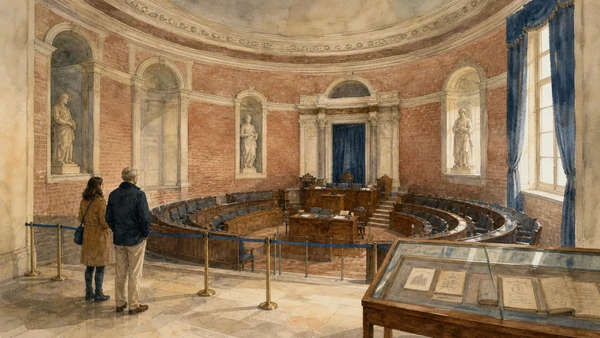
A compact semicircular chamber preserves the setting in which representatives debated after the 1848 Statuto.

Subalpine Parliament chamber: constitutional politics in its original room

A compact semicircular chamber preserves the setting in which representatives debated after the 1848 Statuto. The site becomes clearer when its surviving fabric, later alterations and present use are read together.

Today

Opening, ticketing, room access and temporary displays can change. Check the institution’s official notice shortly before visiting, use the designated entrance and allow for security or conservation controls.

History

The chamber served the lower house of the Kingdom of Sardinia and became central to legislation and political conflict preceding Italian unification.

How to read this place

Begin with seating and speaker relationships. Then compare documents identifying actual debates with conservation barriers separating visitor from chamber; the differences are evidence, not visual noise.

What to notice

  • seating and speaker relationships
  • documents identifying actual debates
  • conservation barriers separating visitor from chamber
Museo Nazionale del Risorgimento Italiano · Official site
Original documentary watercolour of Subalpine Parliament chamber: constitutional politics in its original room in Turin · Piedmont, showing accurate architecture, landscape, people and present-day use
Subalpine Parliament chamber: constitutional politics in its original roomOriginal Merlintravel documentary watercolour · 2026
04

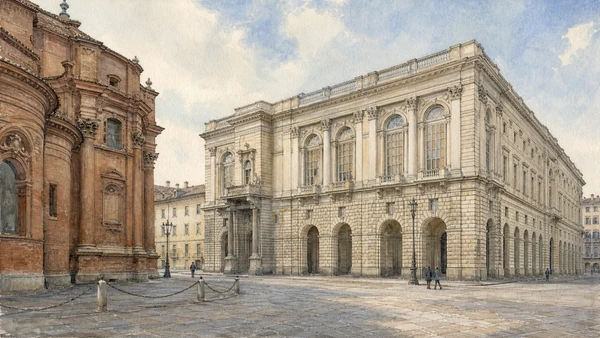
A large nineteenth-century addition on Piazza Carlo Alberto records the scale of a national legislature whose capital moved before the chamber was used as intended.

The Italian Parliament wing: expansion that arrived too late

A large nineteenth-century addition on Piazza Carlo Alberto records the scale of a national legislature whose capital moved before the chamber was used as intended. The site becomes clearer when its surviving fabric, later alterations and present use are read together.

Today

Opening, ticketing, room access and temporary displays can change. Check the institution’s official notice shortly before visiting, use the designated entrance and allow for security or conservation controls.

History

The rear wing was designed after 1861 for the Parliament of the Kingdom of Italy, but the transfer of the capital to Florence made its principal chamber obsolete before completion.

How to read this place

Begin with nineteenth-century stone façade versus baroque brick. Then compare the unfulfilled chamber volume with urban clearance that formed piazza carlo alberto; the differences are evidence, not visual noise.

What to notice

  • nineteenth-century stone façade versus Baroque brick
  • the unfulfilled chamber volume
  • urban clearance that formed Piazza Carlo Alberto
Museo Nazionale del Risorgimento Italiano · Official site
Original documentary watercolour of The Italian Parliament wing: expansion that arrived too late in Turin · Piedmont, showing accurate architecture, landscape, people and present-day use
The Italian Parliament wing: expansion that arrived too lateOriginal Merlintravel documentary watercolour · 2026
05

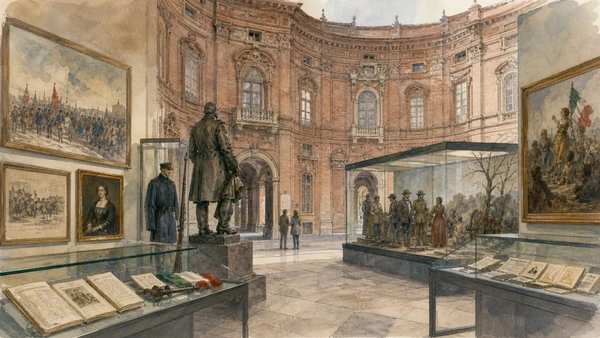
Objects, paintings, documents and reconstructed contexts present unification within wider European revolutions and nation-making.

National Museum of the Risorgimento: collection and interpretation

Objects, paintings, documents and reconstructed contexts present unification within wider European revolutions and nation-making. The site becomes clearer when its surviving fabric, later alterations and present use are read together.

Today

Opening, ticketing, room access and temporary displays can change. Check the institution’s official notice shortly before visiting, use the designated entrance and allow for security or conservation controls.

History

The museum was founded in 1878 and moved to Palazzo Carignano in the twentieth century; successive installations changed which actors and conflicts received attention.

How to read this place

Begin with chronology and geographic scope. Then compare original document versus later commemorative art with women and non-elite actors included or absent; the differences are evidence, not visual noise.

What to notice

  • chronology and geographic scope
  • original document versus later commemorative art
  • women and non-elite actors included or absent
Museo Nazionale del Risorgimento Italiano · Official site
Original documentary watercolour of National Museum of the Risorgimento: collection and interpretation in Turin · Piedmont, showing accurate architecture, landscape, people and present-day use
National Museum of the Risorgimento: collection and interpretationOriginal Merlintravel documentary watercolour · 2026
06

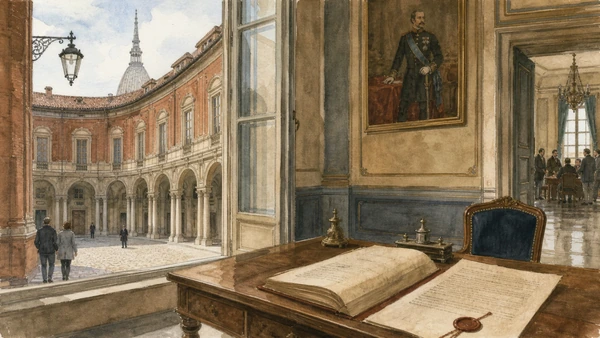
A charter granted by the monarch created representative institutions while retaining strong royal powers and restricted participation.

The Statuto Albertino: constitutional text and political limits

A charter granted by the monarch created representative institutions while retaining strong royal powers and restricted participation. The site becomes clearer when its surviving fabric, later alterations and present use are read together.

Today

Opening, ticketing, room access and temporary displays can change. Check the institution’s official notice shortly before visiting, use the designated entrance and allow for security or conservation controls.

History

Charles Albert issued the Statuto in 1848 for the Kingdom of Sardinia; it later became the constitution of the Kingdom of Italy and remained formally in force through Fascism until the Republic.

How to read this place

Begin with the text and promulgation context. Then compare who could vote and hold office with later uses that changed its practical meaning; the differences are evidence, not visual noise.

What to notice

  • the text and promulgation context
  • who could vote and hold office
  • later uses that changed its practical meaning
Museo Nazionale del Risorgimento Italiano · Official site
Original documentary watercolour of The Statuto Albertino: constitutional text and political limits in Turin · Piedmont, showing accurate architecture, landscape, people and present-day use
The Statuto Albertino: constitutional text and political limitsOriginal Merlintravel documentary watercolour · 2026
07

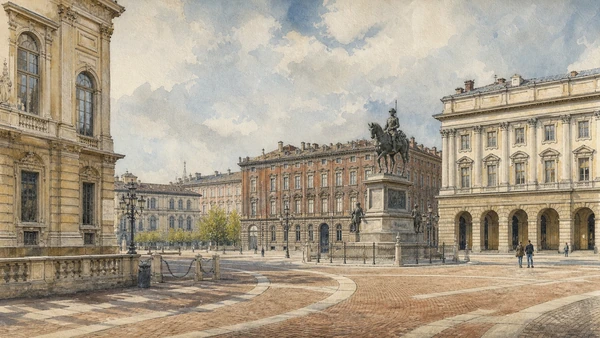
Palace wing, library, equestrian monument and open public ground frame a nineteenth-century reworking of dense urban blocks.

Piazza Carlo Alberto: a square built around historical revision

Palace wing, library, equestrian monument and open public ground frame a nineteenth-century reworking of dense urban blocks. The site becomes clearer when its surviving fabric, later alterations and present use are read together.

Today

The exterior can usually be read from public space, but events, works and crowd management may change circulation. Keep access routes open and verify any interior visit with the responsible institution.

History

Creation of the square accompanied the palace’s parliamentary expansion and later commemorative projects, replacing older buildings and changing routes between institutions.

How to read this place

Begin with contrasting palace façades. Then compare monument position and sightlines with libraries and daily public use around the square; the differences are evidence, not visual noise.

What to notice

  • contrasting palace façades
  • monument position and sightlines
  • libraries and daily public use around the square
Città di Torino · Official portal
Original documentary watercolour of Piazza Carlo Alberto: a square built around historical revision in Turin · Piedmont, showing accurate architecture, landscape, people and present-day use
Piazza Carlo Alberto: a square built around historical revisionOriginal Merlintravel documentary watercolour · 2026
08

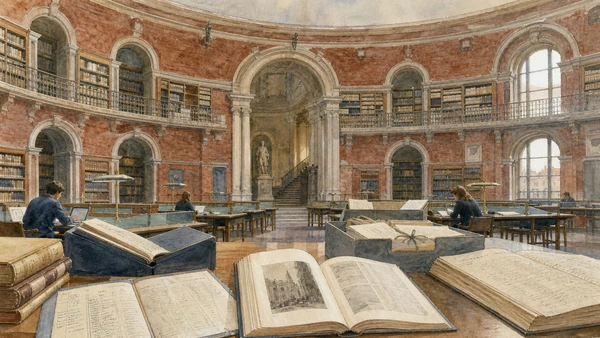
A major state library connects Savoy and university collections to wartime destruction, restoration and present research access.

National University Library: knowledge, loss and reconstruction

A major state library connects Savoy and university collections to wartime destruction, restoration and present research access. The site becomes clearer when its surviving fabric, later alterations and present use are read together.

Today

Opening, ticketing, room access and temporary displays can change. Check the institution’s official notice shortly before visiting, use the designated entrance and allow for security or conservation controls.

History

Collections developed from the university and royal institutional world, suffered severe fire damage during the Second World War and were later rehoused and rebuilt.

How to read this place

Begin with catalogues recording lost and surviving material. Then compare modern reading rooms versus historic setting with controlled access required for fragile holdings; the differences are evidence, not visual noise.

What to notice

  • catalogues recording lost and surviving material
  • modern reading rooms versus historic setting
  • controlled access required for fragile holdings
Biblioteca Nazionale Universitaria di Torino · Ministry of Culture
Original documentary watercolour of National University Library: knowledge, loss and reconstruction in Turin · Piedmont, showing accurate architecture, landscape, people and present-day use
National University Library: knowledge, loss and reconstructionOriginal Merlintravel documentary watercolour · 2026
09

Plaques, streets and collections connect Camillo Cavour to political work while public commemoration simplifies a larger network.

Cavour in Turin: residence, ministry and constructed memory

Plaques, streets and collections connect Camillo Cavour to political work while public commemoration simplifies a larger network. The site becomes clearer when its surviving fabric, later alterations and present use are read together.

Today

The exterior can usually be read from public space, but events, works and crowd management may change circulation. Keep access routes open and verify any interior visit with the responsible institution.

History

Cavour worked within Piedmontese government, diplomacy and parliament before becoming the first prime minister of united Italy; his policies remain inseparable from war, finance and elite institutions.

How to read this place

Begin with documented addresses and archival evidence. Then compare later monuments and street names with other political actors excluded by a single-hero narrative; the differences are evidence, not visual noise.

What to notice

  • documented addresses and archival evidence
  • later monuments and street names
  • other political actors excluded by a single-hero narrative
Museo Nazionale del Risorgimento Italiano · Official site
Original documentary watercolour of Cavour in Turin: residence, ministry and constructed memory in Turin · Piedmont, showing accurate architecture, landscape, people and present-day use
Cavour in Turin: residence, ministry and constructed memoryOriginal Merlintravel documentary watercolour · 2026
10

A Baroque square later acquired monuments, institutions and neighbourhood uses that complicate its court origin.

Piazza Carlo Emanuele II and national memory beyond one dynasty

A Baroque square later acquired monuments, institutions and neighbourhood uses that complicate its court origin. The site becomes clearer when its surviving fabric, later alterations and present use are read together.

Today

The exterior can usually be read from public space, but events, works and crowd management may change circulation. Keep access routes open and verify any interior visit with the responsible institution.

History

Designed during Savoy expansion, the square changed through nineteenth-century memorial culture, policing, commerce and modern social use.

How to read this place

Begin with original planned geometry. Then compare later monument and tree planting with residential and institutional edges operating today; the differences are evidence, not visual noise.

What to notice

  • original planned geometry
  • later monument and tree planting
  • residential and institutional edges operating today
Città di Torino · Official portal
Original documentary watercolour of Piazza Carlo Emanuele II and national memory beyond one dynasty in Turin · Piedmont, showing accurate architecture, landscape, people and present-day use
Piazza Carlo Emanuele II and national memory beyond one dynastyOriginal Merlintravel documentary watercolour · 2026

Turin through time

A short chronology

From Augusta Taurinorum and the Savoy court to national capital, industrial metropolis and contemporary reuse.

  1. Augusta Taurinorum is founded on a regular Roman grid close to the Po and Dora corridors.

  2. Gates, theatre, walls and urban infrastructure develop within the Roman colony.

  3. Bishops, communes, churches and fortified routes reshape the medieval city and its territory.

  4. The House of Savoy establishes firmer control over Turin, beginning a long dynastic transformation.

  5. The University of Turin is founded and becomes a durable part of the city’s institutional landscape.

  6. Emanuele Filiberto transfers the Savoy capital to Turin, accelerating court planning and fortification.

  7. New squares, straight streets, palaces and churches expand the capital beyond the Roman core.

  8. Guarino Guarini works in Turin, transforming sacred and court architecture through geometry and light.

  9. The siege of Turin ends; the victory is later commemorated through Juvarra’s Basilica of Superga.

  10. Royal status and Juvarra’s projects reinforce Turin’s ceremonial axes and metropolitan residence system.

  11. The Statuto Albertino and the Subalpine Parliament make Turin central to constitutional politics.

  12. Turin serves as the first capital of the Kingdom of Italy before the government moves to Florence.

  13. FIAT, Lingotto and Mirafiori help turn Turin into a major industrial and migrant metropolis.

  14. Bombing, occupation, resistance and liberation damage the city and leave a complex memorial geography.

  15. Deindustrialisation, museum growth, adaptive reuse and metropolitan regeneration repeatedly change Turin.

Before your visit

Practical information

01

Check the live page

Opening hours, reservation systems, restoration, exhibitions and transport can change. Recheck the linked official institution shortly before departure.

02

Separate worship and tourism

Churches and sanctuaries remain religious spaces. Services, funerals and community use take priority over visitor itineraries.

03

Plan real distances

Turin · Piedmont combines dense urban routes with lakes, valleys and dispersed towns. Do not compress distant chapters into an unsafe or superficial day.

04

Keep thresholds open

Arcades, station halls, markets, courtyards, workshops and residential streets must continue to function while you observe or photograph them.

05

Use current mobility data

Check the responsible rail, navigation, bus, road or park operator on the day; replacement services and weather can change an otherwise sound route.

06

Read change honestly

Restoration, reconstruction, adaptive reuse and new development have all shaped the landscape visible today.

Method and sources

Sources and image credits

This guide uses official museum, ministry, municipal, transport, park and UNESCO documentation checked on 29 August 2026. It separates durable historical interpretation from access details that can change, distinguishes surviving fabric from restoration or reconstruction, and treats worship, work, residence and public movement as part of the evidence. Every chapter links its principal institutional source; tickets, closures, weather and transport must always be verified again on the day of the visit.

All ten images are original Merlintravel editorial watercolours based on documented present-day conditions. They are illustrations, not substitutes for archaeological plans. Opening hours, tickets, accessible routes, temporary exhibitions and conservation work can change; consult the linked official pages shortly before visiting.