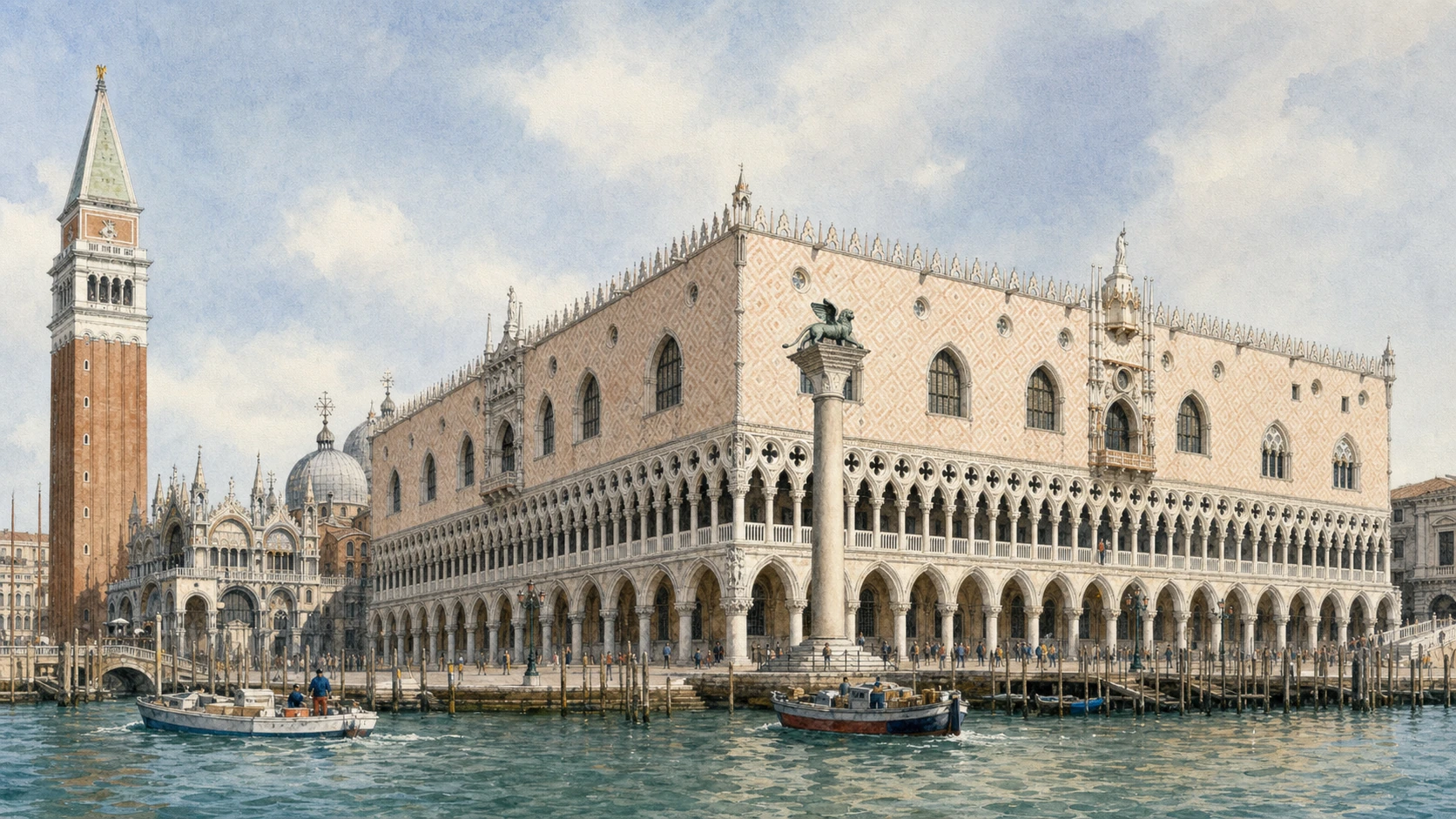
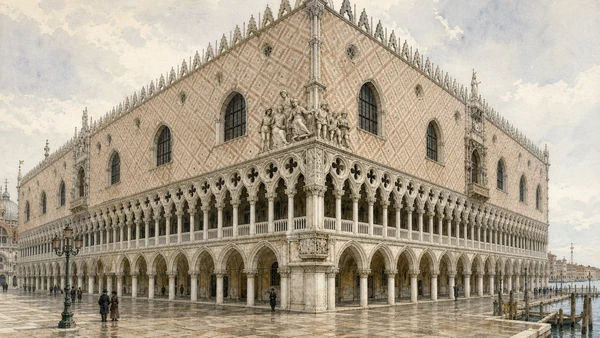
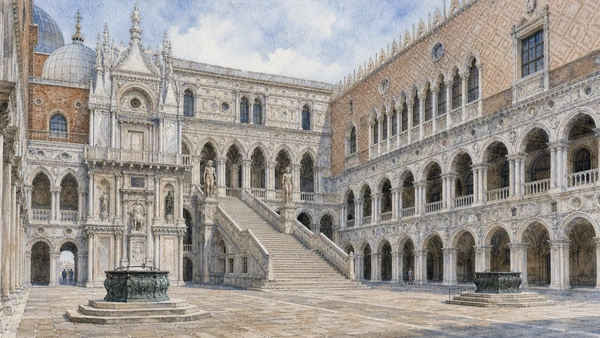
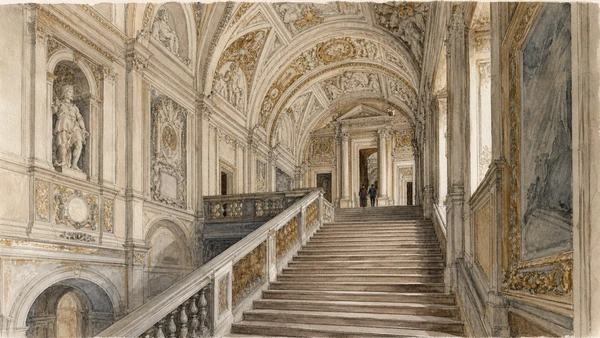
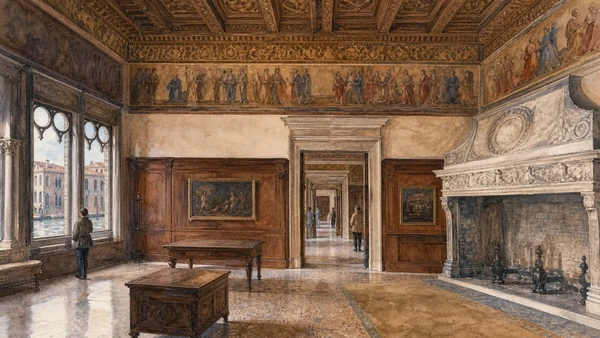
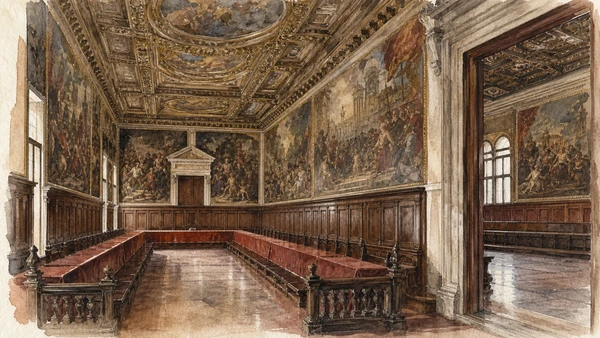
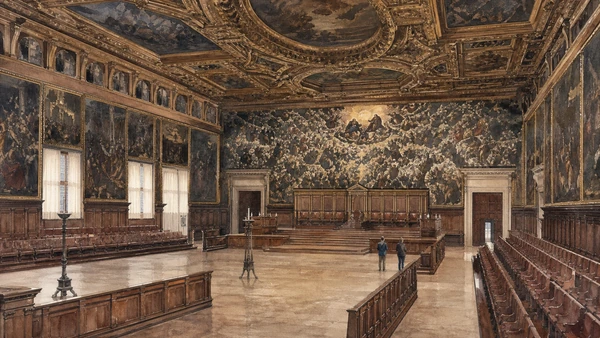
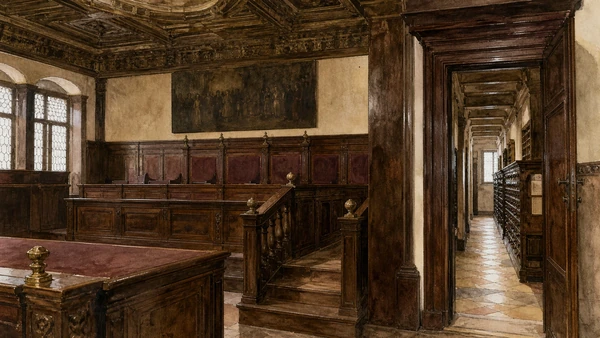
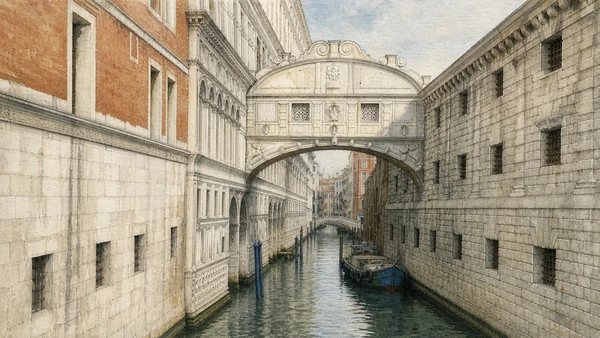
The palace joined the doge’s residence to the principal councils, law courts, chanceries, armoury and prisons of the Venetian Republic. Its famous Gothic exterior reverses an expected hierarchy: open arcades and a pierced loggia support a large patterned wall. Inside, movement becomes increasingly controlled. Courtyard, ceremonial stairs, apartments and institutional chambers assign different routes to office holders, petitioners, ambassadors, guards and defendants.
The doge occupied the highest and oldest magistracy, but the office was elective, bound by written promises and surrounded by councils. The Great Council defined the patrician political body; Senate and Collegio managed policy and diplomacy; the Council of Ten addressed security and serious state matters; multiple courts divided judicial work. Paintings and carved ceilings celebrated stability, divine favour and maritime dominion, yet the rooms also preserve fires, reconstruction, bureaucratic procedure and the fear of concentrated authority.
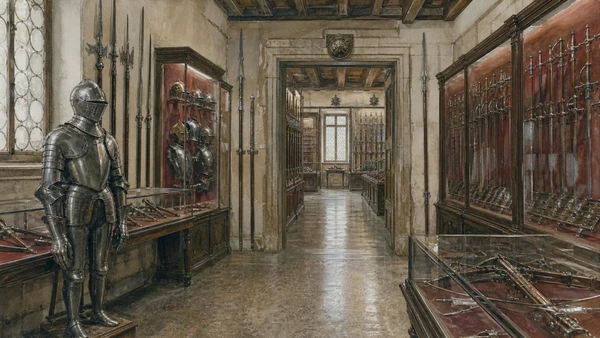
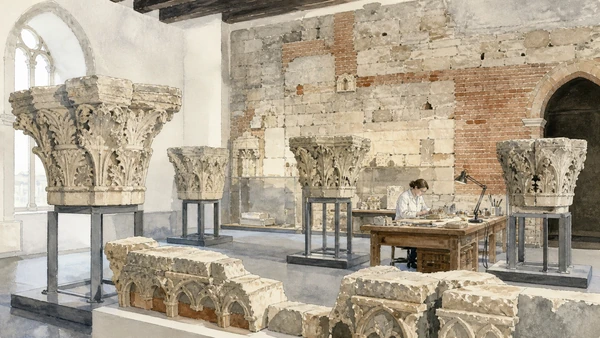
The museum route does not make every space equally accessible. The regular itinerary crosses the Museo dell’Opera, courtyard, apartments, institutional chambers, armoury and prisons, but special routes require reservation. MUVE states that the regular visit is accessible while the Secret Itineraries, Armoury and Prisons are not. That distinction matters: the palace’s historic circulation includes narrow stairs, bridges and level changes that a celebratory account can easily hide.
Move from façade to route, from ceremonial image to institutional seating, and from justice rooms to the physical confinement that completed the state’s architecture.