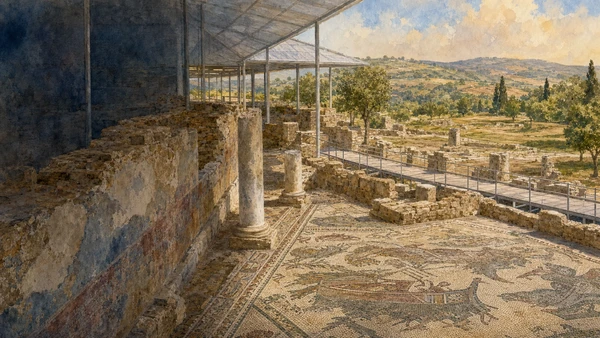
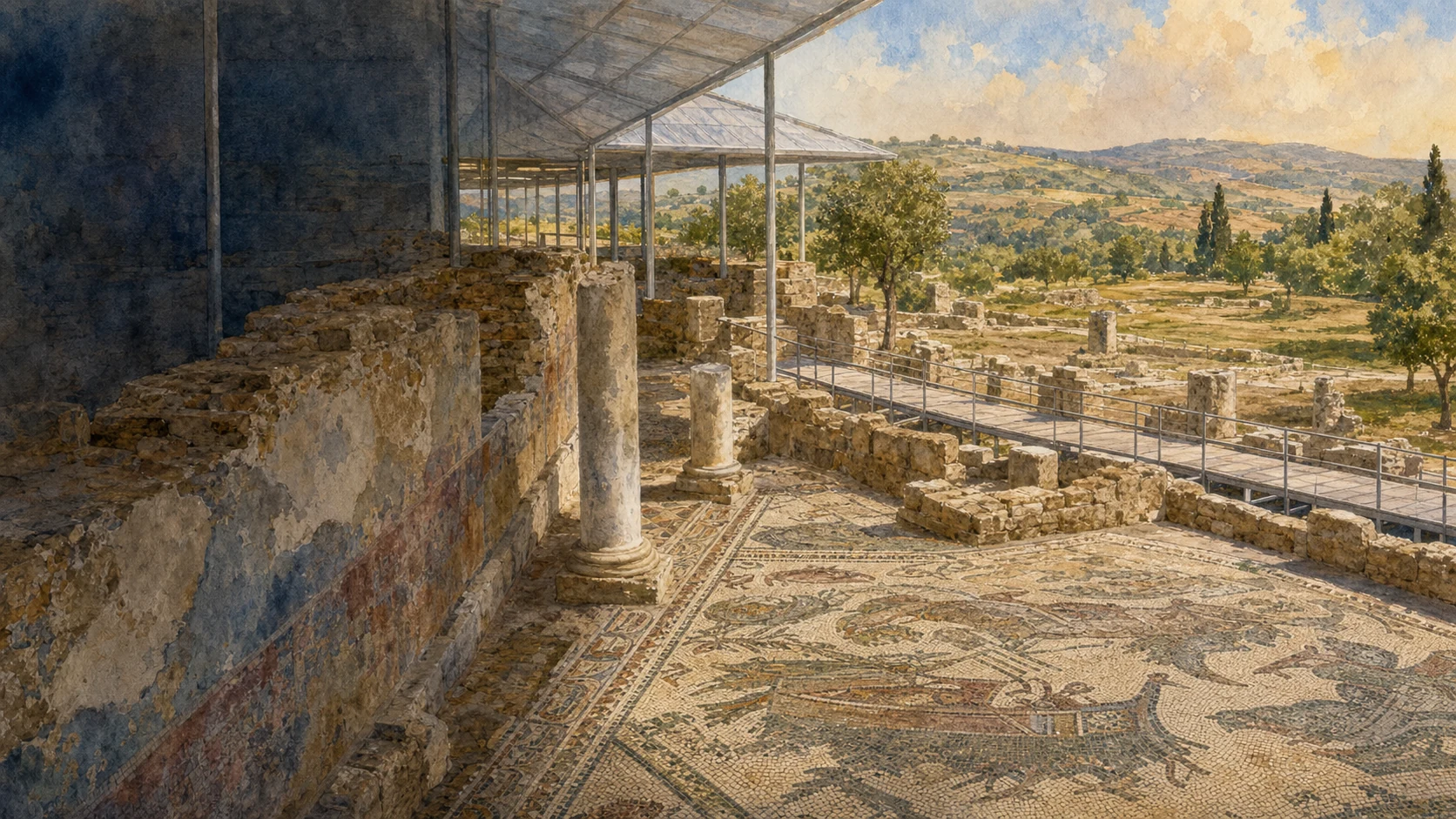
Documentary watercolour of the Villa Romana del Casale with its protected mosaic corridors, surviving walls and green inland Sicilian setting
MERLINTRAVEL

Sicily · Journey 03

The interior and Roman Sicily

High cities, imperial estates, Demeter, ceramics and the sulphur landscape.

The regional idea

Sicily beyond the coastal horizon.

Central Sicily is a region of long views, ridges, cultivated basins and difficult crossings. Piazza Armerina, Aidone, Enna, Caltagirone and Caltanissetta do not form a single urban corridor; they reveal how power, agriculture, religion, craft and extraction were organised across the island's interior.

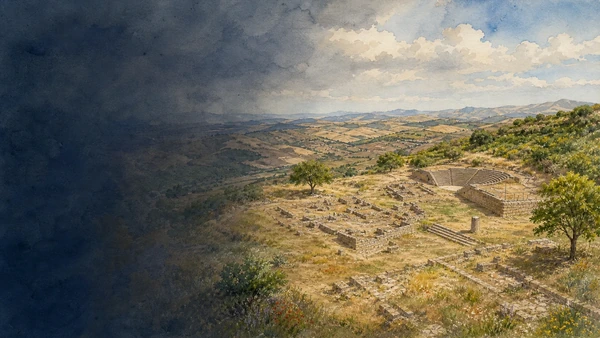
Morgantina complicates any simple division between indigenous and Greek Sicily. Enna and Lake Pergusa carry the landscape of Demeter and Persephone into later civic and devotional traditions. The Villa Romana del Casale reveals an estate world linked to Mediterranean wealth, transport and labour rather than an isolated collection of mosaics.

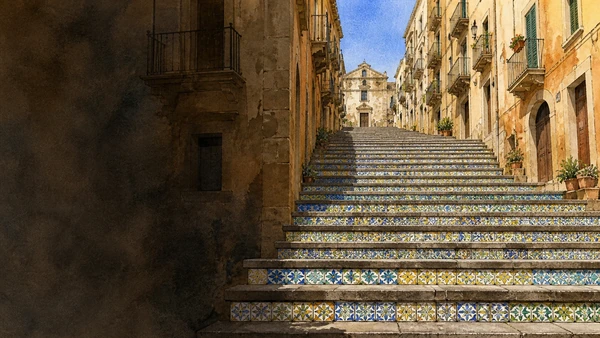
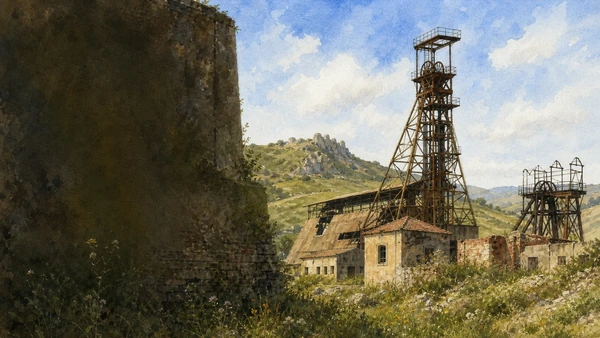
Medieval hill towns, churches and castles reused strategic heights. Caltagirone developed a ceramic culture that joins local clay, workshop knowledge and urban display. Farther west, the sulphur districts around Caltanissetta expose the industrial and social history of mines, railways, labour and abandonment.

This chapter restores weight to an interior too often crossed quickly between coasts. Its five guides show central Sicily as a productive and ceremonial landscape whose histories remain visible in fields, museums, workshops, processions and industrial ruins.

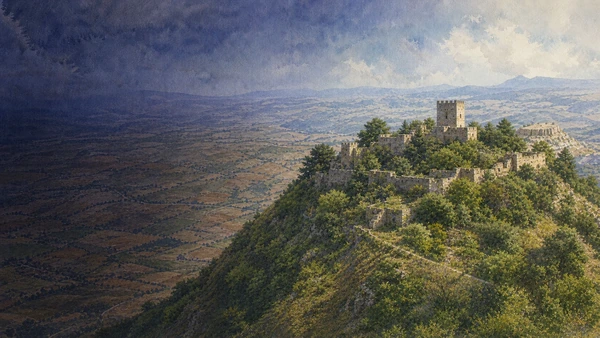
Documentary watercolour of Enna's Castello di Lombardia on the high ridge above the broad agricultural landscape of central Sicily

Reading the landscape

Height, cultivation and extraction

The interior alternates plateaus, eroded hills and broad cereal country. Towns command routes and watersheds; farms and estates depend on soils, seasonal water and access to markets. Distance itself is part of the historical explanation.

Clay became ceramics, wheat supported cities and estates, and sulphur drew workers underground. These materials connect the monumental record to economies and forms of labour that are less visible but equally central.

Four connecting threads

What holds this journey together.

The chapter is organised by relationships between landscape, settlement and historical change. These four threads continue across the individual destination guides.

01

An estate, not only mosaics

Villa del Casale belongs to roads, agriculture, administration and labour as much as to its celebrated floors.

02

Demeter's landscape

Myth, sanctuary, lake and cultivated land connect Enna and Morgantina without turning archaeology into legend.

03

Craft as urban identity

Caltagirone's ceramics join workshop practice, architecture, ritual and contemporary production.

04

The underground economy

Sulphur mines make labour, migration, infrastructure and environmental damage part of the regional narrative.

How the guides connect

Five guides across the central watershed

Piazza Armerina and the Villa del Casale open the Roman estate landscape. Morgantina and Aidone extend the chronology through an ancient city and a museum shaped by returned objects. Enna provides the high political and sacred centre; Caltagirone follows living craft; Caltanissetta concludes with the modern industrial cost of extracting the interior's resources.