Central Sicily is a region of long views, ridges, cultivated basins and difficult crossings. Piazza Armerina, Aidone, Enna, Caltagirone and Caltanissetta do not form a single urban corridor; they reveal how power, agriculture, religion, craft and extraction were organised across the island’s interior.
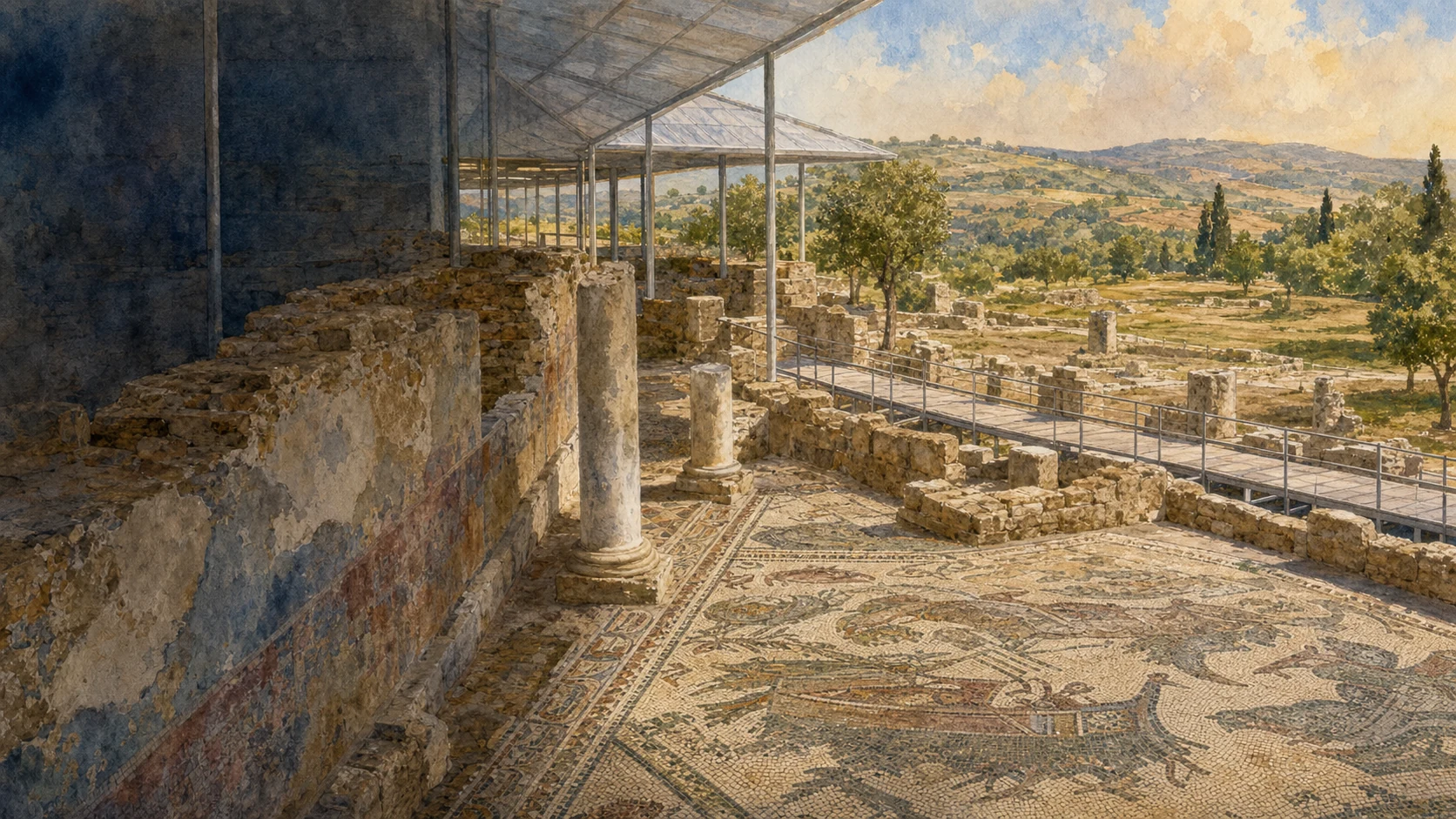
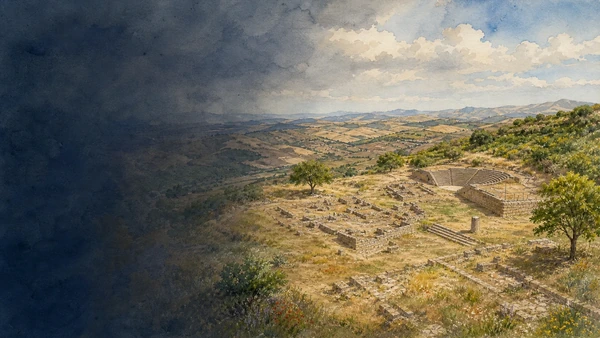
Morgantina complicates any simple division between indigenous and Greek Sicily. Enna and Lake Pergusa carry the landscape of Demeter and Persephone into later civic and devotional traditions. The Villa Romana del Casale reveals an estate world linked to Mediterranean wealth, transport and labour rather than an isolated collection of mosaics.
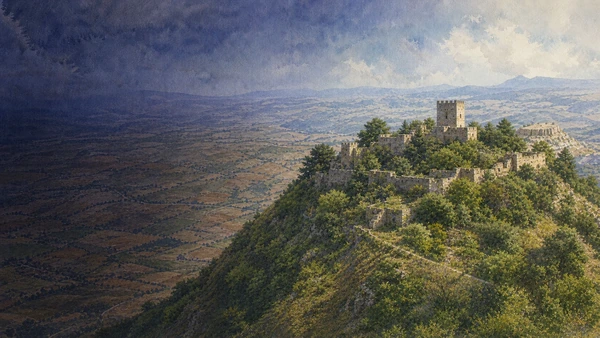
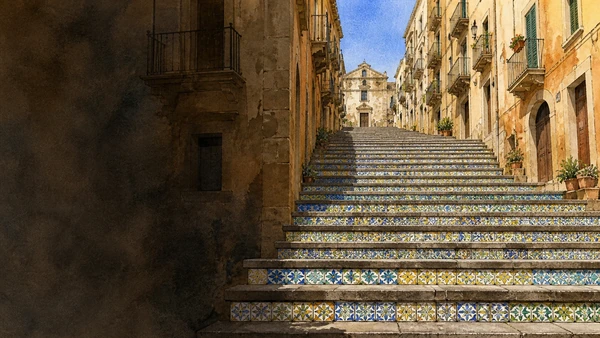
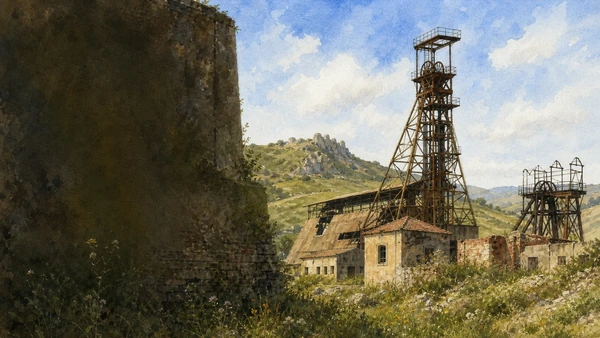
Medieval hill towns, churches and castles reused strategic heights. Caltagirone developed a ceramic culture that joins local clay, workshop knowledge and urban display. Farther west, the sulphur districts around Caltanissetta expose the industrial and social history of mines, railways, labour and abandonment.
This chapter restores weight to an interior too often crossed quickly between coasts. Its five guides show central Sicily as a productive and ceremonial landscape whose histories remain visible in fields, museums, workshops, processions and industrial ruins.