Piedmont · Independent metropolitan chapter

TurinRoman grid, Savoy capital and industrial metropolis

Ten illustrated gateways through a city shaped by Roman infrastructure, court planning, museums, constitutional politics, the Po, manufacturing, migration and continual metropolitan reuse.

10complete guides
100illustrated chapters
110guide images
Turin is not one royal square and an industrial memory. It is a metropolitan system held together by an ancient grid, court institutions, rivers, factories, residence, migration and continual reuse.
A city chapter within Piedmont

The ten guides divide Turin by connected territories rather than a monument checklist. Roman and royal institutions organise the centre; the Po and hills form an eastern landscape; railways and factories explain the southern and northern metropolis.

Lingotto, Mirafiori, Dora, Rivoli, Venaria, Stupinigi and Superga are not optional excursions. They explain labour, housing, ecology, dynastic movement, infrastructure and cultural reuse across the same metropolitan city.

Four systems to follow

Explore the city

The guides connect the Roman centre and Savoy institutions with the Po, the hills and the industrial city.

01

Street, river and infrastructure

Roman streets, rivers, arcades, railway corridors and court roads organise movement, land use and daily service.

02

Court, constitution and worship

Palaces, parliament chambers, basilicas, museums and parishes record different forms of authority and responsibility.

03

Production and knowledge

Markets, factories, museums, universities and design institutions connect materials, labour and international exchange.

04

Residence and public life

Homes, schools, housing, transport, parks and conservation keep heritage tied to contemporary life.

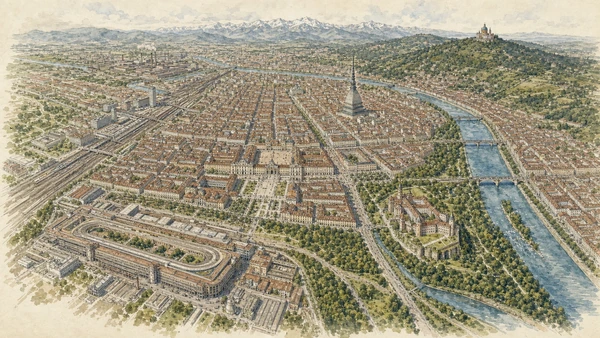
Original illustrated atlas of Turin with ten connected Roman, royal, civic, river, industrial and metropolitan territories
The metropolis as a city

Ten gateways across connected urban layers.

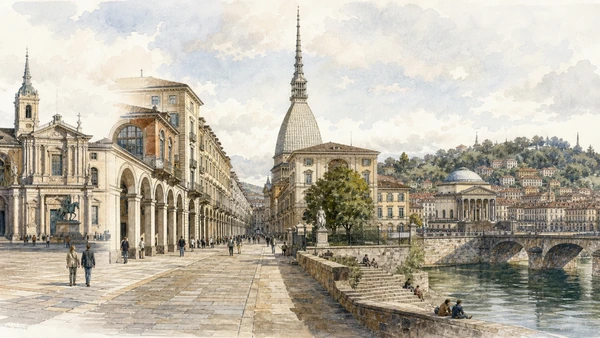
The Roman grid and Piazza Castello anchor the historic centre; Via Po opens toward the river and hills; railways and industrial corridors extend the atlas toward Lingotto, Dora and the metropolitan royal belt.

The Turin atlas

Explore the ten city guides.

Every card leads to a complete local guide with ten chapters, current official references and eleven distinct documentary watercolours. Public links activate only after the authorised publication pass.

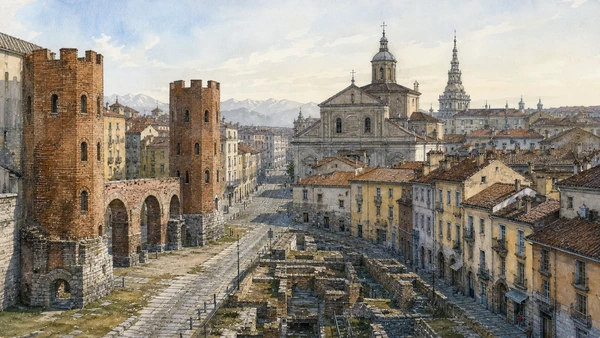
Documentary watercolour for Roman Turin, the Cathedral and the Quadrilatero
01Roman and medieval core

Roman Turin, the Cathedral and the Quadrilatero

Roman gate and theatre, street grid, cathedral, Shroud Chapel, medieval churches and an inhabited historic quarter.

Open guide ↗
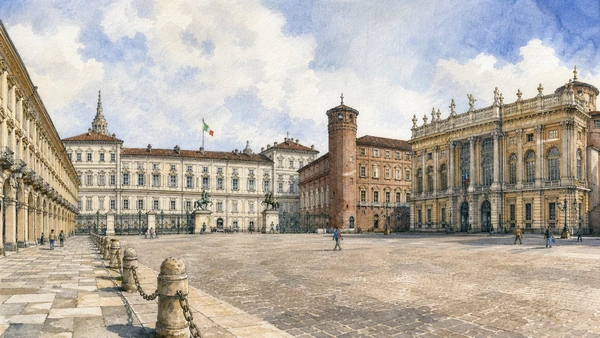
Documentary watercolour for Piazza Castello, the Royal Palace and Palazzo Madama
02Royal and civic state centre

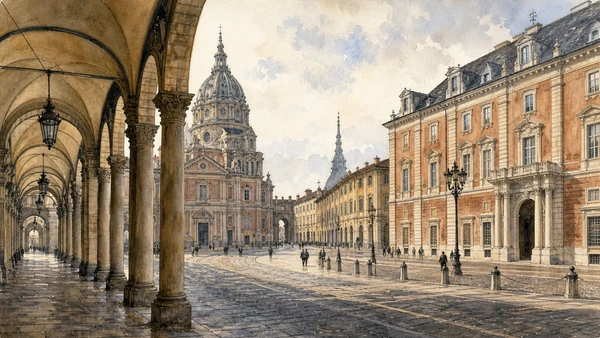
Piazza Castello, the Royal Palace and Palazzo Madama

Palace, armoury, library, galleries, gardens, layered civic castle, theatre and the ceremonial public square.

Open guide ↗
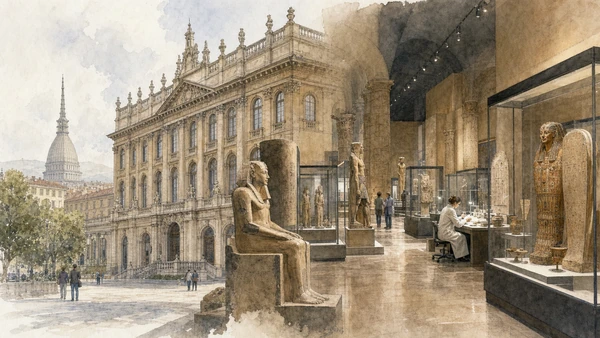
Documentary watercolour for Museo Egizio and the City of Collections
03Archaeology and collecting

Museo Egizio and the City of Collections

Acquisition, excavation, papyri, statuary, conservation, provenance, human remains and the institutions behind display.

Open guide ↗
Documentary watercolour for Via Po, the Mole and the Cinema City
04Arcades, university and cinema

Via Po, the Mole and the Cinema City

Baroque axis, books and cafés, university, Mole Antonelliana, moving-image collections and the river threshold.

Open guide ↗
Documentary watercolour for Palazzo Carignano and the Risorgimento City
05Constitution and national memory

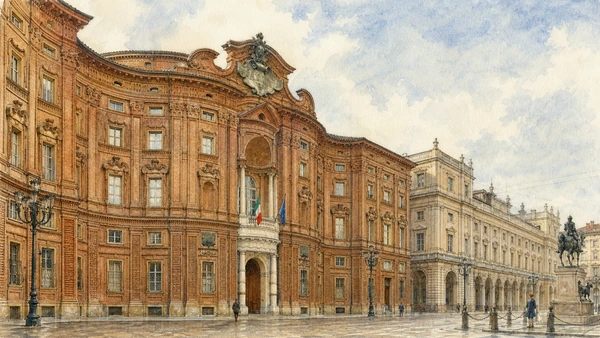
Palazzo Carignano and the Risorgimento City

Guarini’s residence, parliamentary chambers, constitutional institutions, archives, monuments and contested memory.

Open guide ↗
Documentary watercolour for Baroque Turin, Guarini and the Planned Capital
06Baroque capital and urban planning

Baroque Turin, Guarini and the Planned Capital

Sacred geometry, palaces, straight axes, paired churches, arcades, gates and the architecture of court power.

Open guide ↗
Documentary watercolour for The Po, Valentino and the Turin Hills
07River, park and inhabited hills

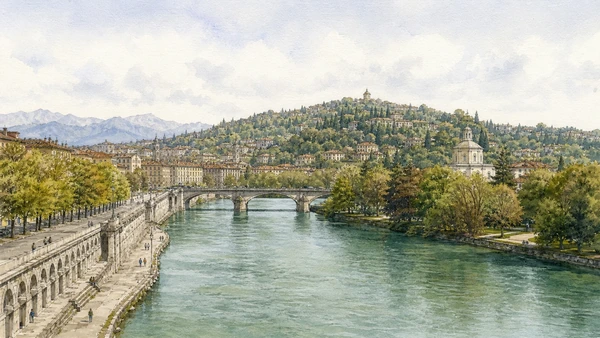
The Po, Valentino and the Turin Hills

Engineered banks, public park, Savoy castle, exhibition reconstruction, worship, ecology and hillside residence.

Open guide ↗
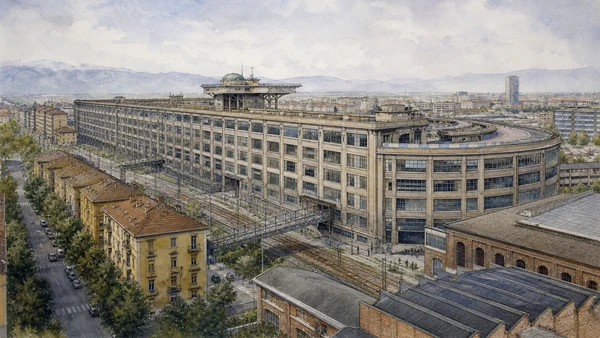
Documentary watercolour for Lingotto, FIAT and the Industrial Metropolis
08Factory and migrant metropolis

Lingotto, FIAT and the Industrial Metropolis

Vertical factory, roof track, automobile collections, logistics, Mirafiori, workers’ housing and migration.

Open guide ↗
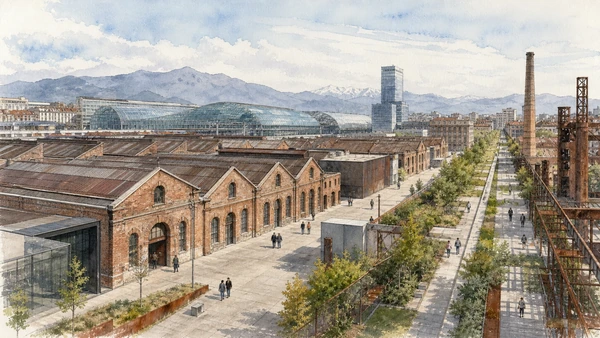
Documentary watercolour for OGR, Porta Susa and Contemporary Turin
09Railway and adaptive reuse

OGR, Porta Susa and Contemporary Turin

Repair workshops, modern art, buried tracks, new station, Dora industrial remains and regeneration pressure.

Open guide ↗
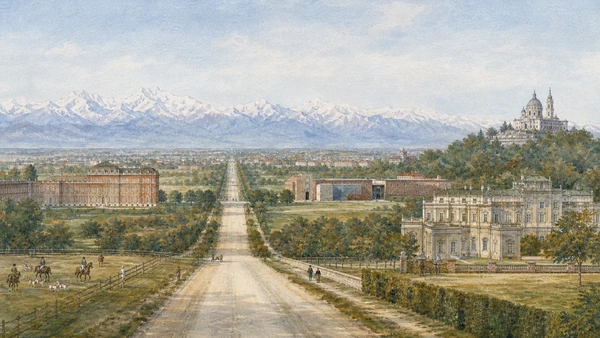
Documentary watercolour for Venaria, Rivoli, Stupinigi and Superga
10The metropolitan royal belt

Venaria, Rivoli, Stupinigi and Superga

Palace, hunting lodge, contemporary museum, gardens, court roads, votive basilica and royal burial landscape.

Open guide ↗
How to use the atlas

Build a route that respects distance and time.

Choose one territory

A complete guide is one full day or two linked half-days, not a race across distant districts and royal sites.

Check live access

Churches, museums, palaces, railways and exhibitions publish different rules; verify the institution before travel.

Read the approach

Street axes, bridges, factory gates, railway barriers, conservation and thresholds explain why monuments occupy their places.

Leave room for residents

Doors, worship, markets, housing, commuter journeys and quiet belong to people who live and work here.

Official starting points

Institutions before shortcuts.

Opening hours and access conditions change. Current institutions remain the final reference for tickets, closures and visitor rules.

Turin begins in its connected layers.

Ten gateways through the Roman city, the Savoy capital, the working metropolis and the communities that keep its heritage inhabited.