Veneto · Independent city-and-lagoon chapter

VeniceCity, islands and working water

Ten illustrated gateways through a living lagoon system shaped by worship, government, exchange, craft, residence, conservation and water transport.

10complete guides
100illustrated chapters
110guide images
Venice is not one floating centre. It is a city-and-lagoon system held together by islands, channels, work, worship, residence and continual maintenance.
A city chapter within Veneto

The ten guides divide Venice by connected territories rather than a monument checklist. Government and ceremony face the basin; trade follows the Grand Canal; religious and civic institutions structure the sestieri; the Arsenale, Murano furnaces and island workshops make labour visible.

Burano, Mazzorbo, Torcello, Giudecca and San Giorgio are not optional excursions. They explain settlement, craft, food, industry, ecology and water transport across the same inhabited lagoon.

Four systems to follow

Explore the city

Each guide stands alone, but Venice becomes intelligible when water, institutions, production and residence are traced across their borders.

01

Water and terrain

Channels, shallows, tides, bridges and boat routes organise every arrival, building and daily service.

02

Republic and worship

Palace, basilicas, confraternities and parishes record different forms of power and responsibility.

03

Production and exchange

Markets, fondaci, shipyards, furnaces and textiles connect materials, labour and long-distance trade.

04

Residence and care

Homes, schools, housing, transport and conservation keep heritage tied to contemporary life.

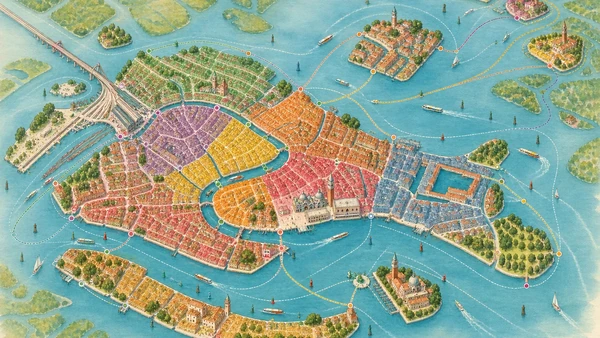
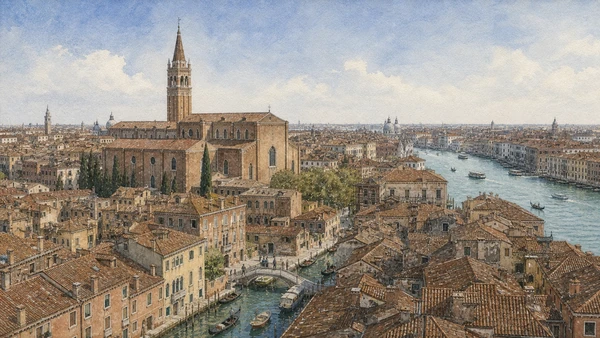
Original illustrated atlas of Venice with ten connected city, island and lagoon territories
The lagoon as a city

Ten gateways across connected water.

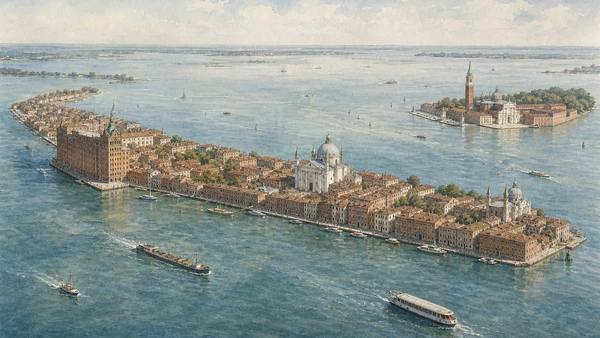
The Grand Canal links the central sestieri; the basin opens toward Castello, Giudecca and San Giorgio; public boats extend the atlas north to Murano, Burano, Mazzorbo and Torcello.

The Venice atlas

Ten complete guides, all open.

Every card leads to a complete guide with ten chapters, current official references and eleven distinct documentary watercolours.

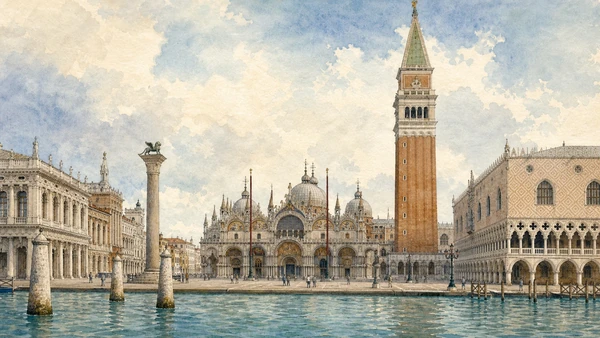
Documentary watercolour for St Mark's Square, Basilica and Campanile
01Ceremonial threshold

St Mark’s Square, Basilica and Campanile

Basin, piazza, mosaics, treasury, museum, tower and acqua alta inside an active civic and sacred centre.

Open guide ↗
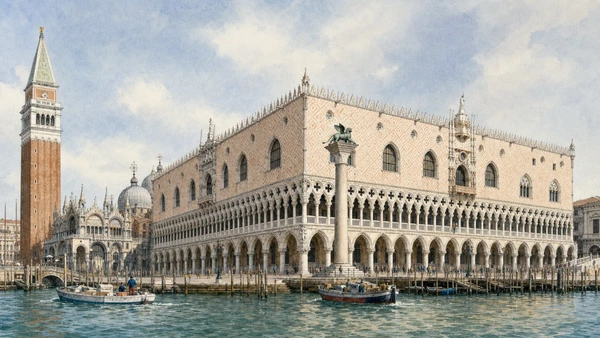
Documentary watercolour for Doge's Palace, Bridge of Sighs and the State
02State and justice

Doge’s Palace, Bridge of Sighs and the State

Ceremonial rooms, councils, armoury, prisons and the architecture through which the Republic represented power.

Open guide ↗
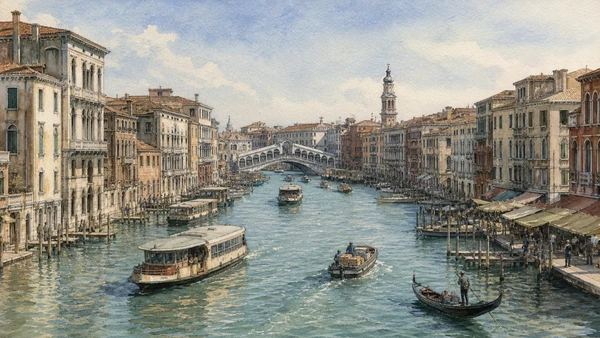
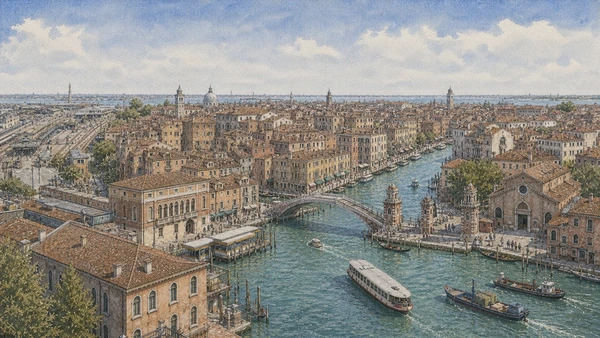
Documentary watercolour for Grand Canal, Rialto Bridge and Markets
03Mercantile water city

Grand Canal, Rialto Bridge and Markets

Palaces, fondaci, boats, food logistics, the commercial crossing and the wakes of a working main street.

Open guide ↗
Documentary watercolour for San Polo, Santa Croce, Frari and San Rocco
04Western centre

San Polo, Santa Croce, Frari and San Rocco

Franciscan scale, confraternal care, Tintoretto, parish life and the modern arrival edge west of Rialto.

Open guide ↗
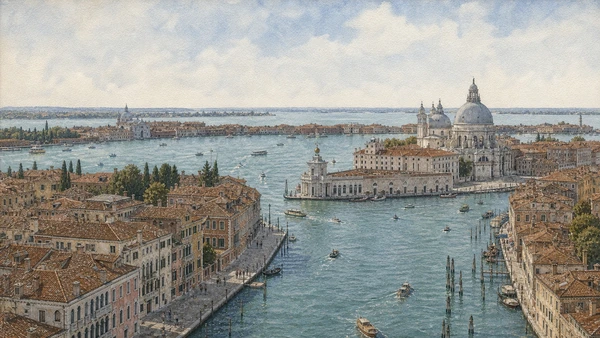
Documentary watercolour for Dorsoduro, Accademia, Salute and Zattere
05Southern bank

Dorsoduro, Accademia, Salute and Zattere

Museum collections, votive architecture, customs, modern art, boat repair and resident university streets.

Open guide ↗
Documentary watercolour for Cannaregio and the Jewish Ghetto
06Northern city

Cannaregio and the Jewish Ghetto

Railway arrival, living Jewish heritage, parish art, Strada Nova and the northern-lagoon threshold.

Open guide ↗
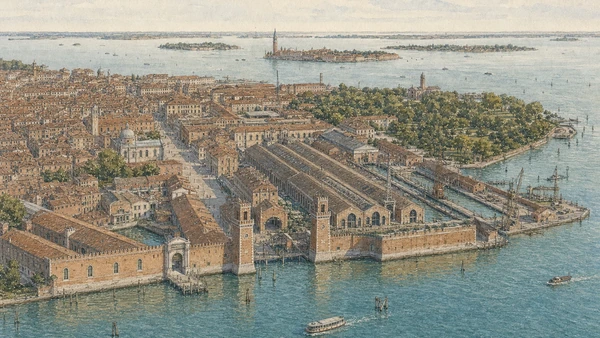
Documentary watercolour for Castello, the Arsenale and the Biennale
07Production and culture

Castello, the Arsenale and the Biennale

Shipyards, ropewalks, former cathedral, inhabited Via Garibaldi, Giardini and contemporary exhibition systems.

Open guide ↗
Documentary watercolour for Murano: Glass and Island Life
08Productive island

Murano: Glass and Island Life

Museum chronology, Romanesque art, furnace teamwork, industrial beads, provenance and energy-dependent production.

Open guide ↗
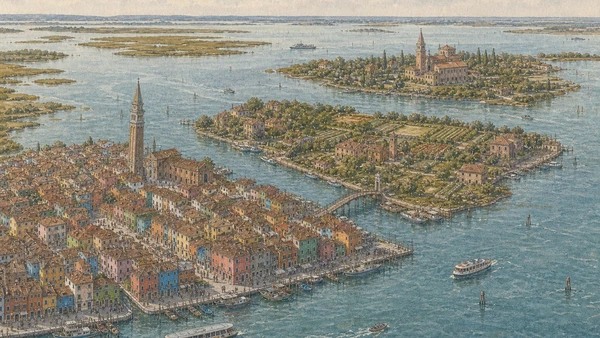
Documentary watercolour for Burano, Mazzorbo and Torcello
09Northern lagoon

Burano, Mazzorbo and Torcello

Resident colour, lace labour, cultivated land, archaeology, early churches and the evidence behind origin legends.

Open guide ↗
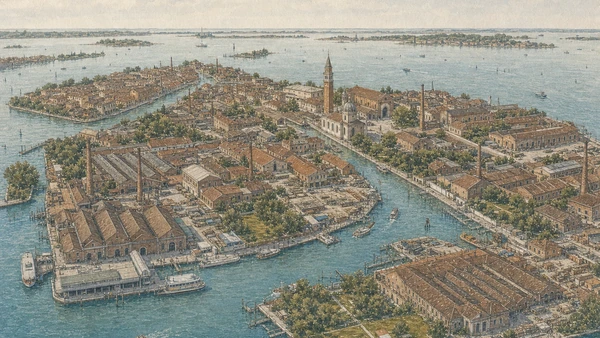
Documentary watercolour for Giudecca and San Giorgio
10Southern waterline

Giudecca and San Giorgio

Palladian churches, industry, civic housing, Benedictine worship, research and the open southern lagoon.

Open guide ↗
How to use the atlas

Build a route that respects water and time.

Choose one territory

A complete guide is one full day or two linked half-days, not a race across distant islands.

Check live access

Churches, museums, boats and exhibitions publish different rules; verify the institution before travel.

Read the approach

Landings, bridges, freight, conservation and thresholds explain why monuments occupy their places.

Leave room for residents

Doors, worship, markets, housing, school journeys and quiet belong to people who live and work here.

Official starting points

Institutions before shortcuts.

Opening hours and access conditions change. Current institutions remain the final reference for tickets, closures and visitor rules.

Venice begins between islands.

Ten gateways through the city, the working water and the communities that keep the lagoon inhabited.